

How To Change The Appearance Of Windows 10
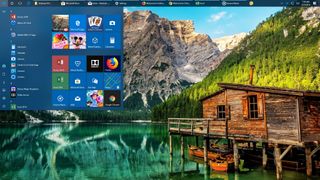
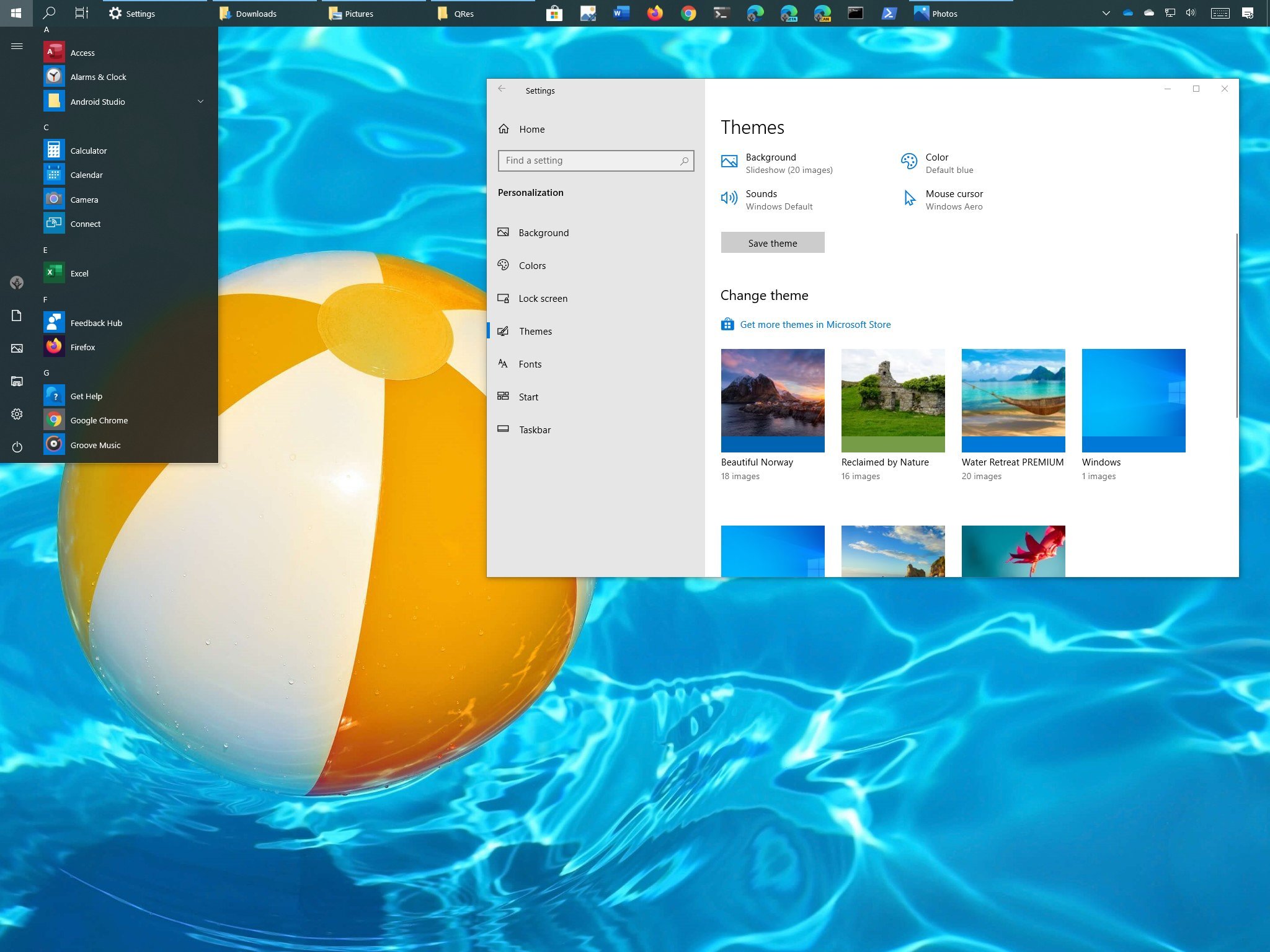
Windows 10 includes a broad range of settings to customize the advent to brand the desktop and apps wait better and reflect your personality.
For example, you lot can change the desktop background with a custom epitome or use a theme from the Microsoft Store. You lot can enable the dark mode or modify the color emphasis for visual elements. You can tweak and organize the Start menu and taskbar, and you can adapt a diversity of settings to change the entire look and feel of Windows 10.
In this Windows 10 guide, nosotros'll walk you through the steps to customize the desktop advent and making the experience more personal whether you piece of work from home or function.
- How to alter desktop background on Windows 10
- How to modify arrangement colors on Windows 10
- How to customize the Lock screen on Windows 10
- How to modify themes on Windows 10
- How to customize the Commencement menu on Windows 10
- How to customize the taskbar on Windows ten
How to change desktop background on Windows 10
The easiest way to personalize Windows 10 is to modify the desktop background with a custom paradigm or collection of pictures.
Changing desktop wallpaper
To alter the Windows 10 desktop background, utilize these steps:
- Open Settings.
- Click on Personalization.
- Click on Groundwork.
- Using the "Groundwork" drop-downward menu, select the Picture show option.
- Click the Browse button to select the new wallpaper epitome.
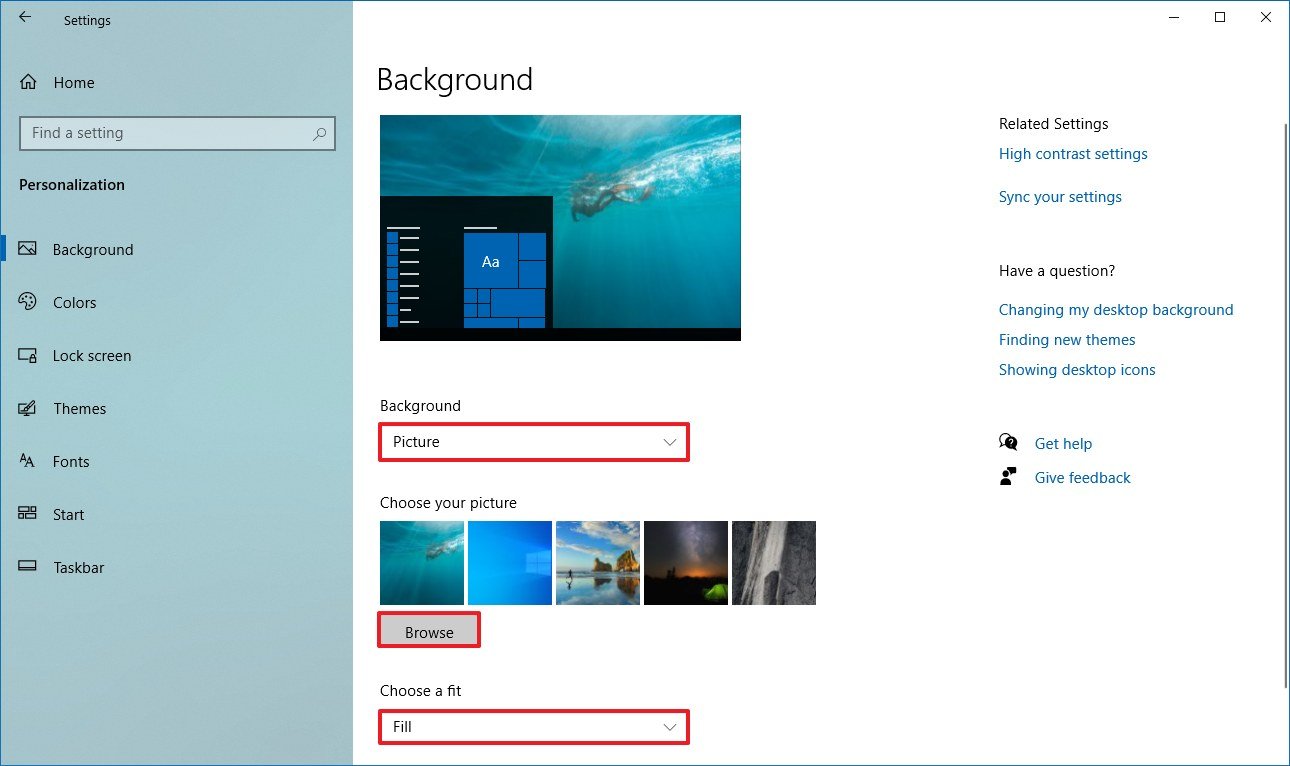
- Using the "Choose a fit" driblet-downwards carte, select the fit that all-time suits the images:
- Fill.
- Fit.
- Stretch.
- Middle.
- Span.
If you're using a multi-monitor setup, use these steps to cull a different background for each display.
Setting up a desktop slideshow
To showcase a picture collection on the desktop, employ these steps:
- Open up Settings.
- Click on Personalization.
- Click on Background.
- Using the "Background" drop-downwardly menu, select the Slideshow option.
- Click the Browse push button to select the folder with the picture collection.
- Use the "Change picture every" drop-downward bill of fare and select how oftentimes images should rotate.
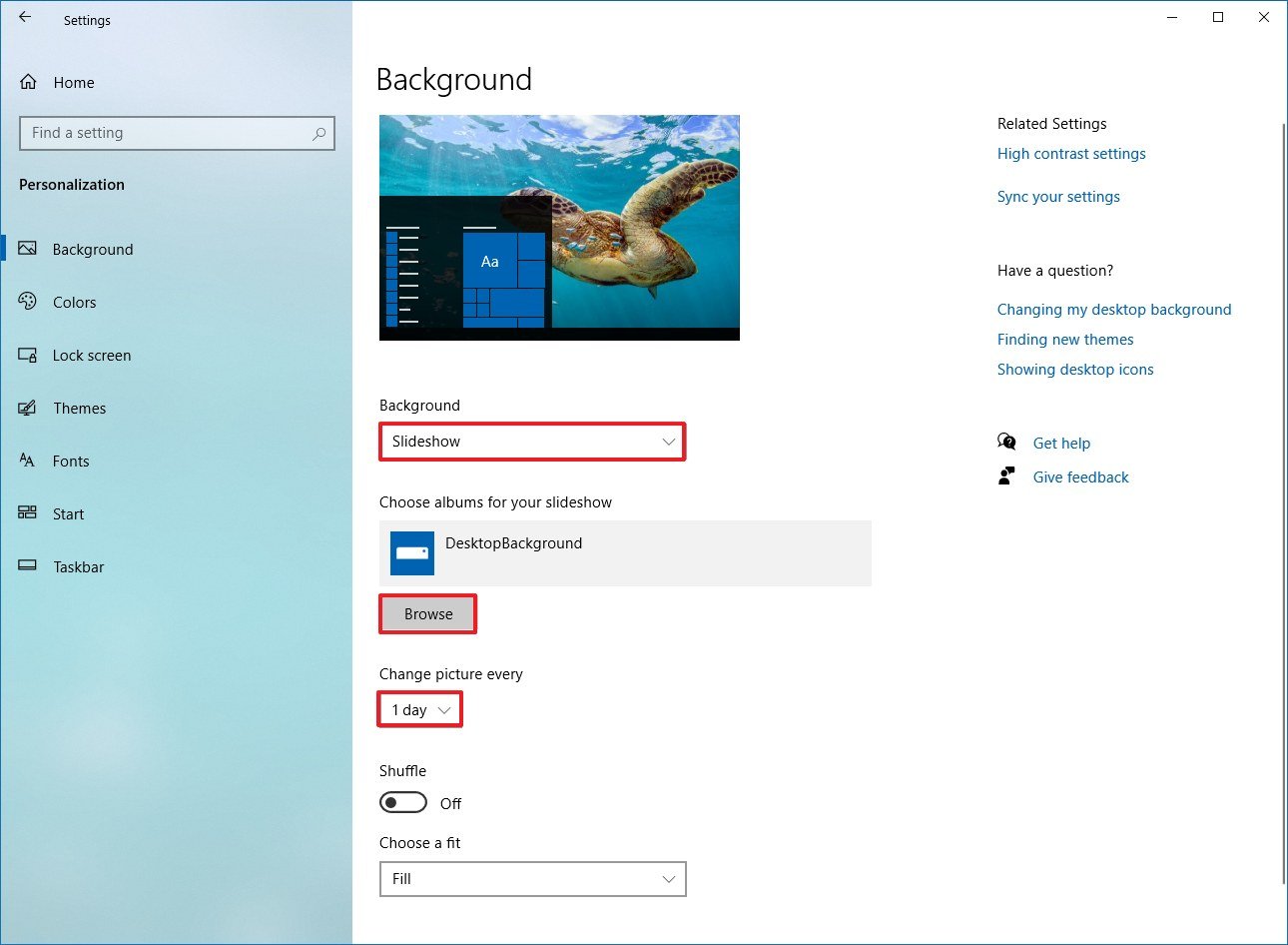
- (Optional) Turn on the Shuffle toggle switch to evidence images in random order.
- Using the "Choose a fit" drop-down card, select the fit that all-time suits the images:
- Fill.
- Fit.
- Stretch.
- Middle.
- Span.
In one case you complete these steps, the desktop will brandish the collection of pictures in the background at the intervals you specified.
How to change arrangement colors on Windows 10
Windows 10 allows you lot to change the colour accent for elements that appear across the feel, including for Start, taskbar, Action Center, title bars, and links in apps and Settings.
Enable dark or light mode
Windows x includes two personalization modes. The light manner is the default mode and works well during daytime, and so there's the nighttime mode that uses a dark colour scheme in backgrounds and other parts of the Os and supported apps. Also, it's an option more suited for a low-light surroundings.
To switch betwixt the low-cal and dark style, utilize these steps:
- Open up Settings.
- Click on Personalization.
- Click on Colors.
- Utilise the "Choose your colour" drop-down menu and select the Light or Dark mode.
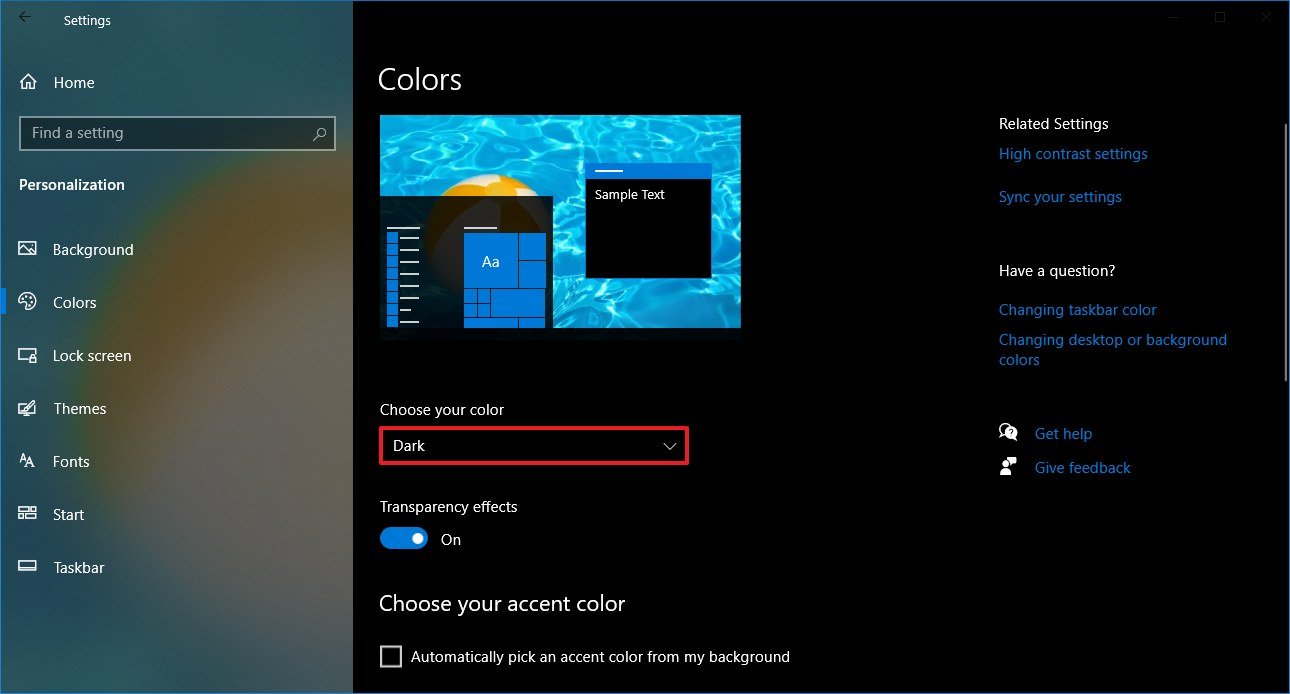
If you want to go a footstep further, you tin can use this guide to configure your computer to switch between the dark and light mode automatically.
Set custom color mode
You tin also use a custom color fashion on Windows 10 using these steps:
- Open Settings.
- Click on Personalization.
- Click on Colors.
- Use the "Choose your color" drop-downward menu and select the Custom option.
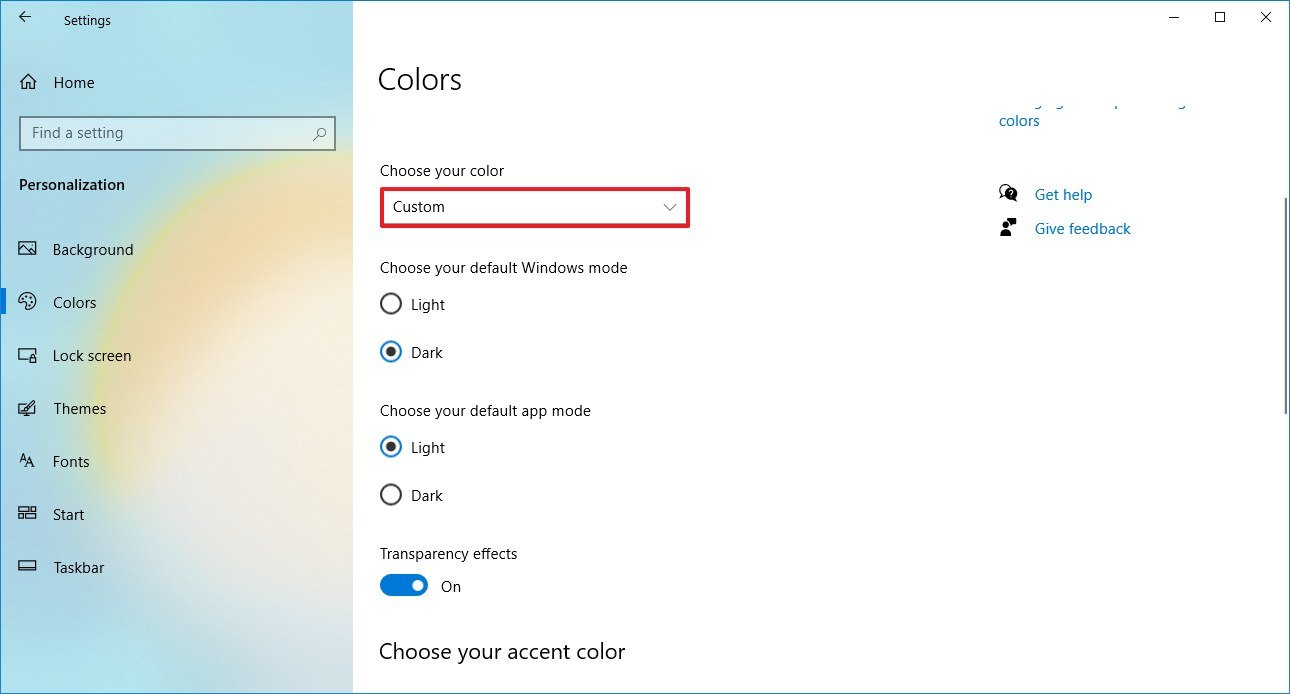
- Utilise the Choose your default Windows mode options to make up one's mind if Start, taskbar, Action Center, and other elements should use the light or dark color mode.
- Use the Choose your default app style options to decide if apps should use the light or night color mode.
Afterwards you complete the steps, the color manner will employ depending on your configuration.
If you desire to utilise the original low-cal color mode, you need to select the Nighttime fashion for Windows mode and Lite for default app way.
Command transparency furnishings
Some elements of Windows ten, such as Start, taskbar, Activeness Center, and apps include transparency effects with mistiness and noise textures, and in the Colors page, you can enable or disable these effects.
To enable or disable Windows 10 transparency, use these steps:
- Open up Settings.
- Click on Personalization.
- Click on Colors.
- Turn on or off the Transparency effects toggle switch.
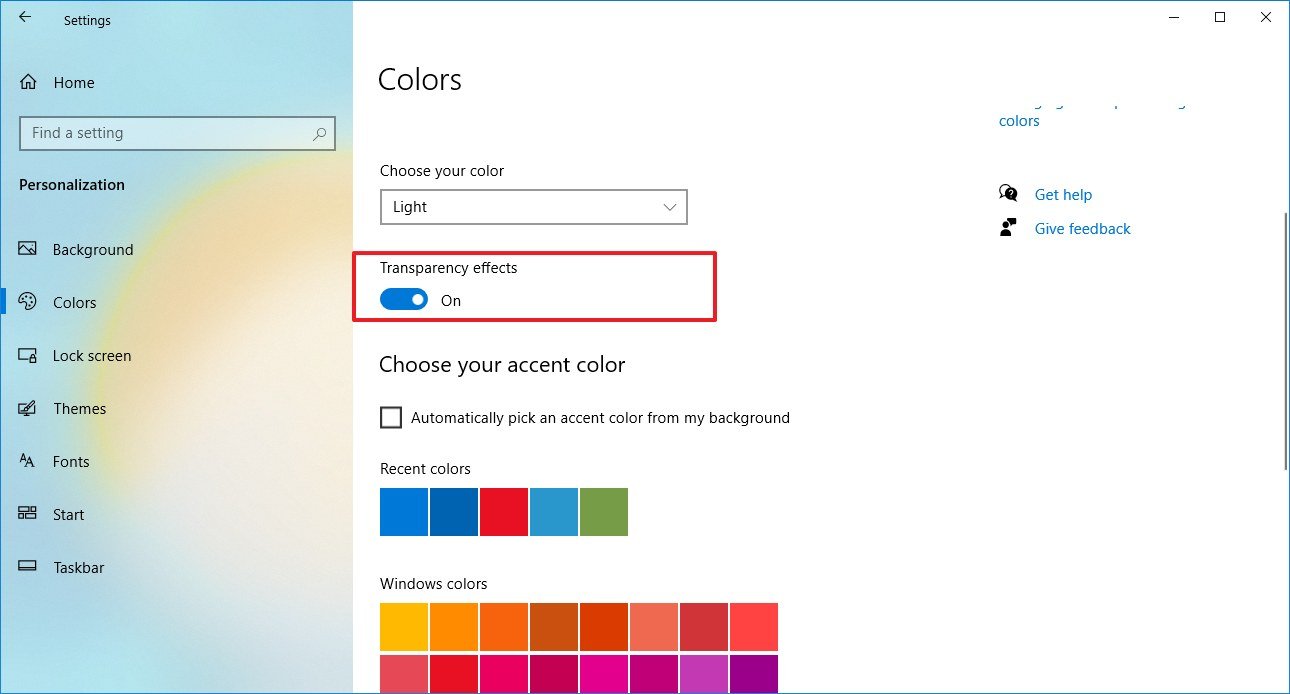
Once you lot complete the steps, transparency effects volition be available according to your selection.
Select color accent
To change the arrangement color on Windows 10, use these steps:
- Open Settings.
- Click on Personalization.
- Click on Colors.
- Select the colour emphasis y'all want across Windows x.Quick tip: If you desire to utilise over again a previous color, y'all can utilise the "Contempo colors" listing.
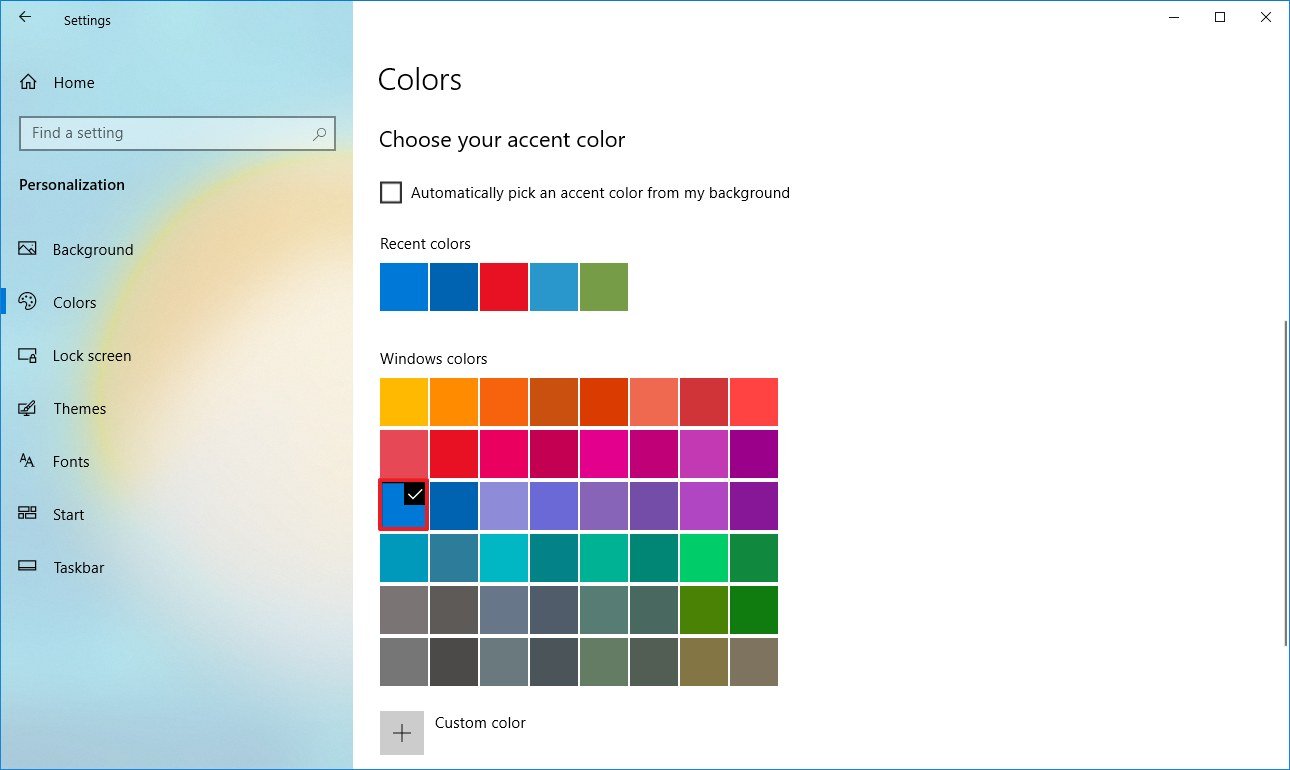
- (Optional) Under the "Choose your accent colour" section, check the Automatically option an emphasis color from my background choice to let the organization to ready a color scheme based on the colors of the current wallpaper.
After you lot complete the steps, buttons, links, system icons, and other elements will switch to the color you specified. If yous desire to see Start, taskbar, Activity centre, and other elements to use the aforementioned color scheme, you need to enable the options at the bottom of the page.
Create custom accent colour
If the color you want isn't on the list, you can create a custom one using these steps:
- Open up Settings.
- Click on Personalization.
- Click on Colors.
- Click the Custom color button.
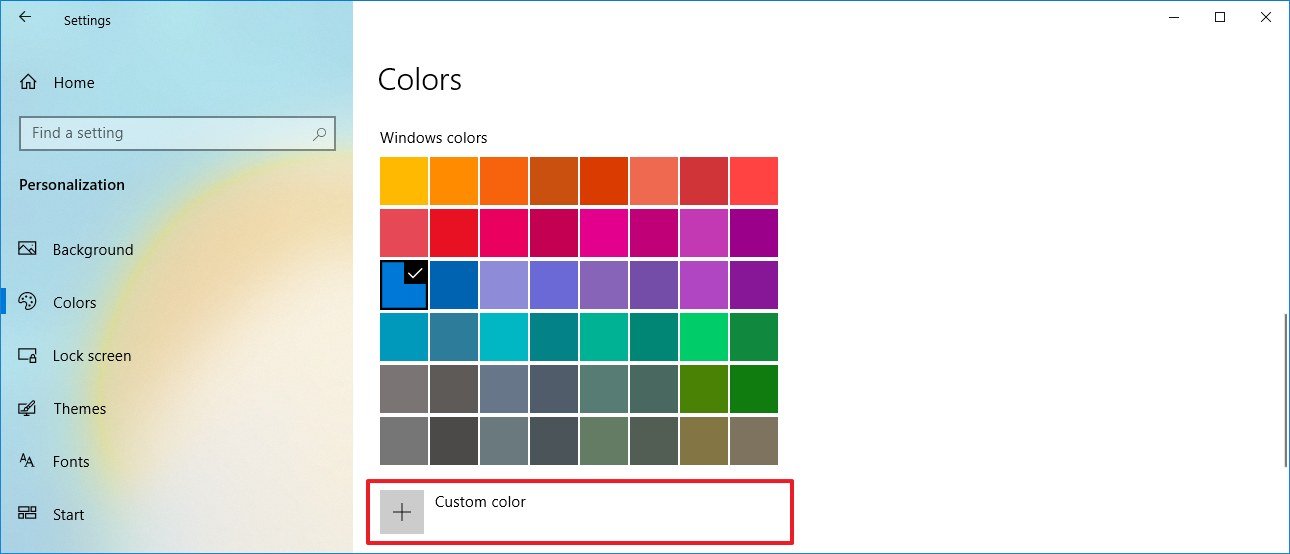
- Create a custom colour using the palette.
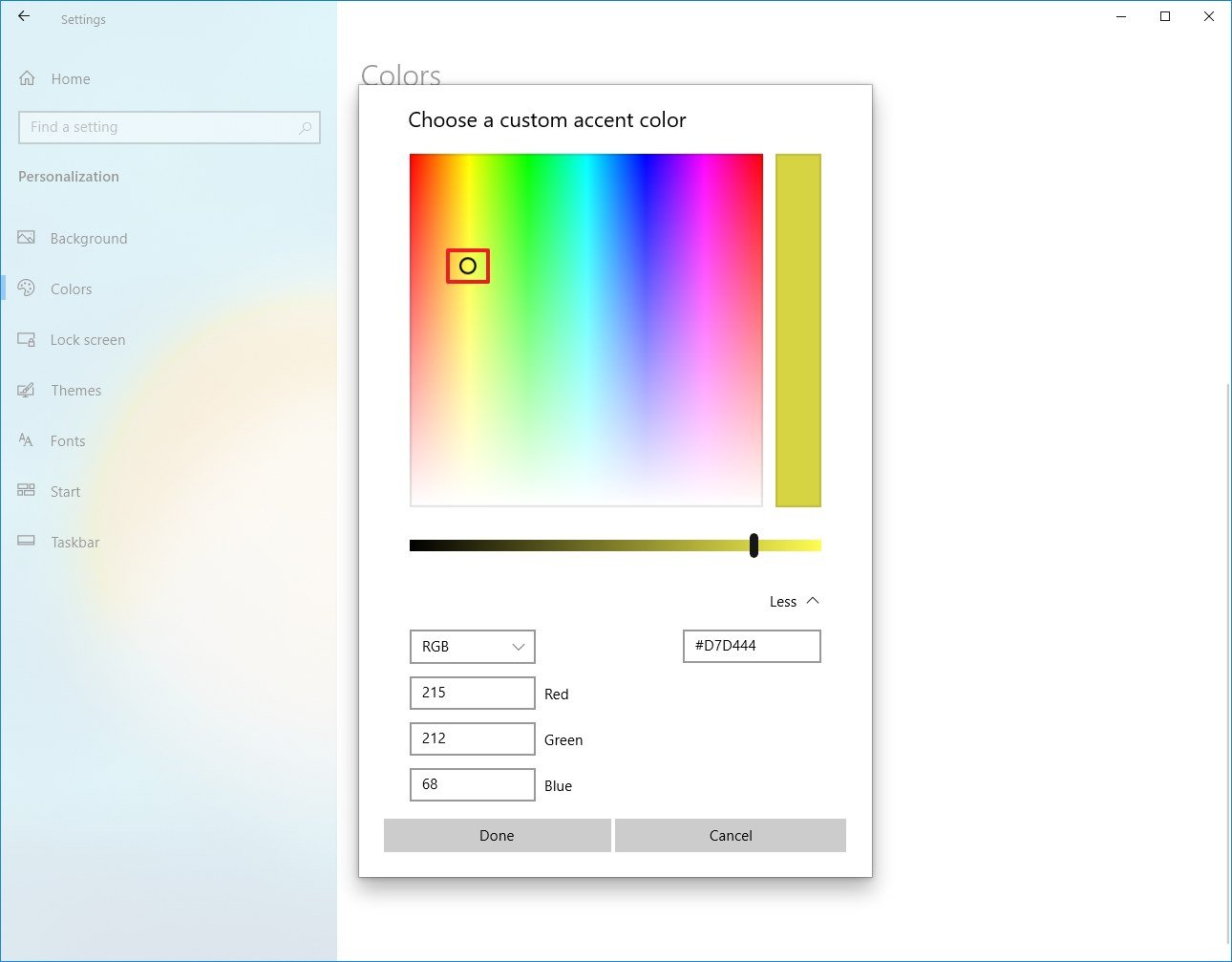
- (Optional) Click the More button to use RGB or HSV codes to create a new color.
- Click the Done button.
Once you consummate the steps, the desktop will use the custom color that yous created.
Fix accent colour for elements
Out of the box, Windows 10 uses the night and lite color scheme for Start, taskbar, Action Center, and File Explorer. You can also use an accent color for these elements if y'all desire to add a picayune more customization.
To evidence accent color for Windows 10 elements, use these steps:
- Open Settings.
- Click on Personalization.
- Click on Colors.
- Use the "Choose your color" drib-down carte du jour and select the Custom option.
- Utilise the "Choose your default Windows style" option and select the Dark option.
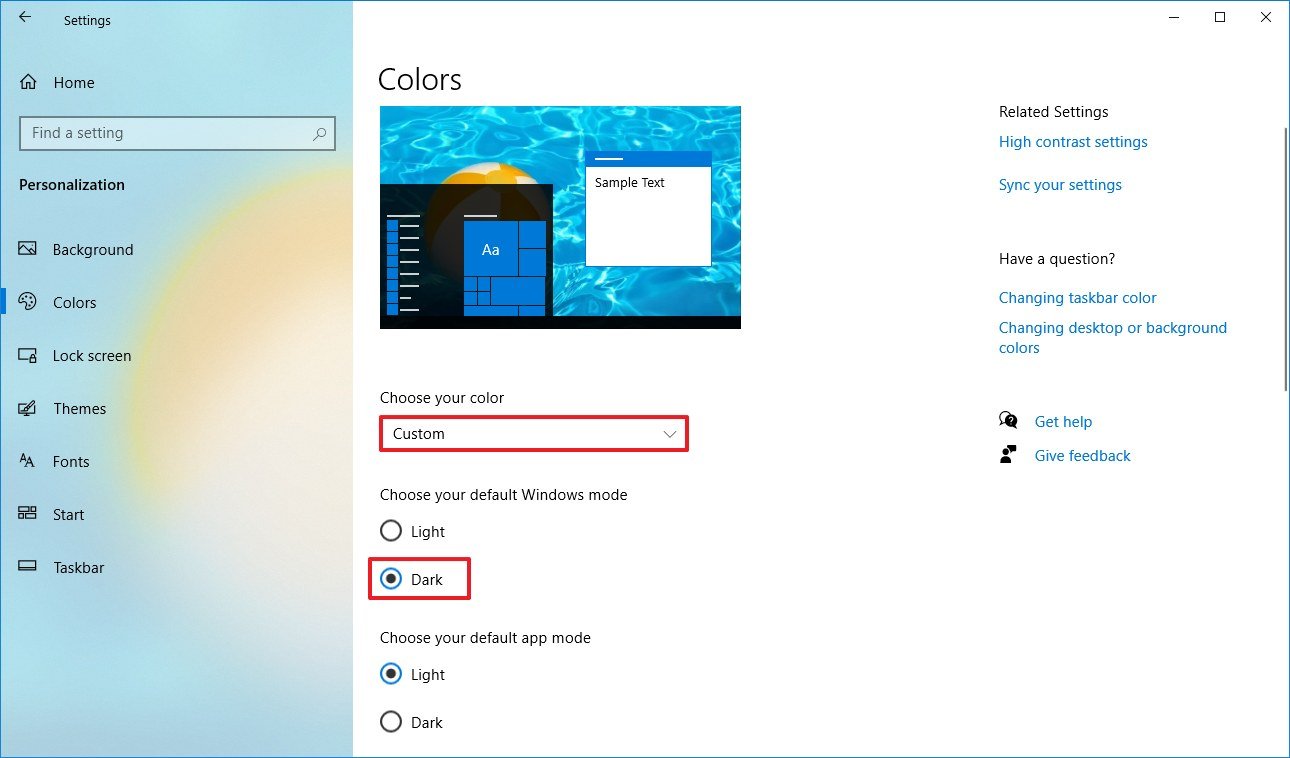
- Under the "Testify accent colour on the following surfaces" department, check the Start, taskbar, and action heart option.
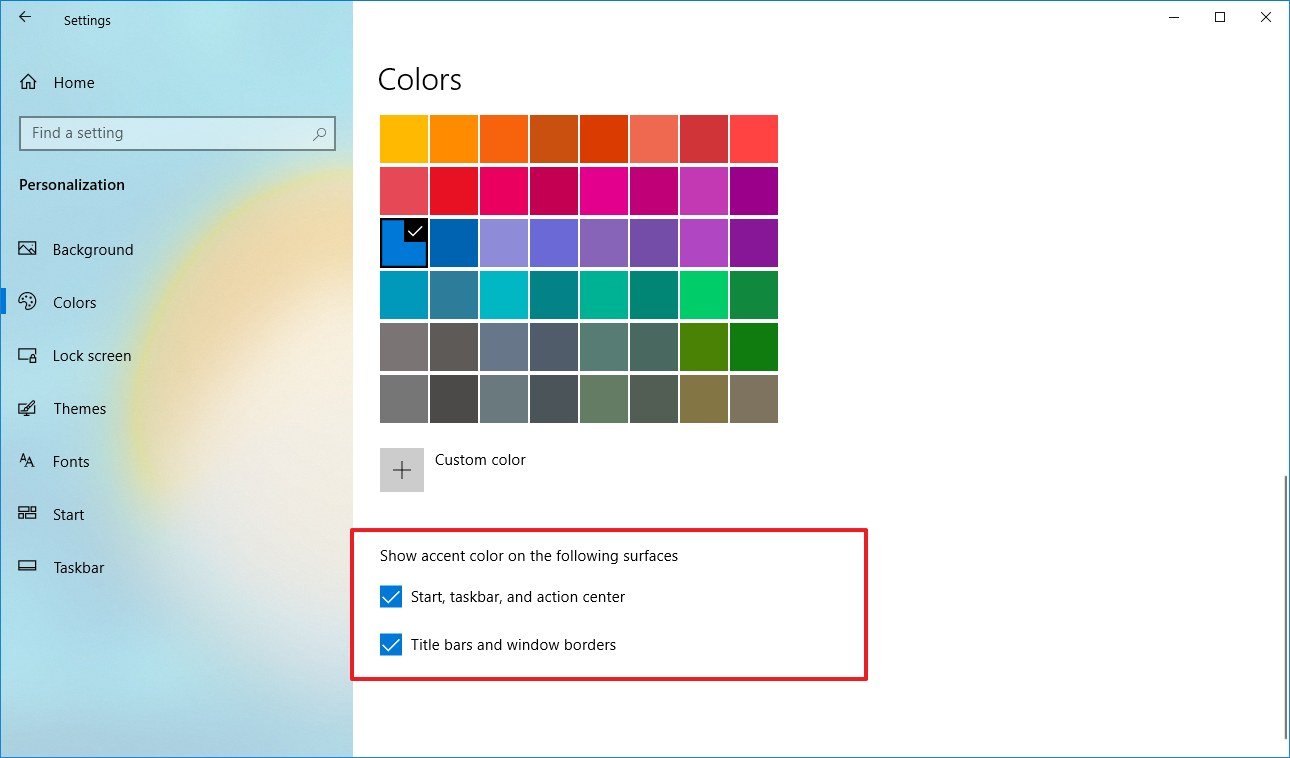
- Bank check the Title bars and window borders option.
After you complete the steps, instead of a dark or calorie-free color scheme, the Start carte du jour, taskbar, Activity Center, and other elements will use the color you selected.
How to customize the Lock screen on Windows 10
Yous tin also customize the Lock screen, which is the screen that slides up every fourth dimension you lot need to get to the Sign-in screen.
Set custom image on Lock screen
The lock screen uses "Windows spotlight" every bit the default option to display different backgrounds every time yous sign in to Windows 10, and while this option pulls stunning images from the cloud, y'all can likewise set whatsoever image yous desire.
To use a custom image on the Windows 10 Lock screen, use these steps:
- Open up Settings.
- Click on Personalization.
- Click on Lock screen.
- Use the "Background" drop-downwards menu, and select the Picture selection.
- Click the Scan button.
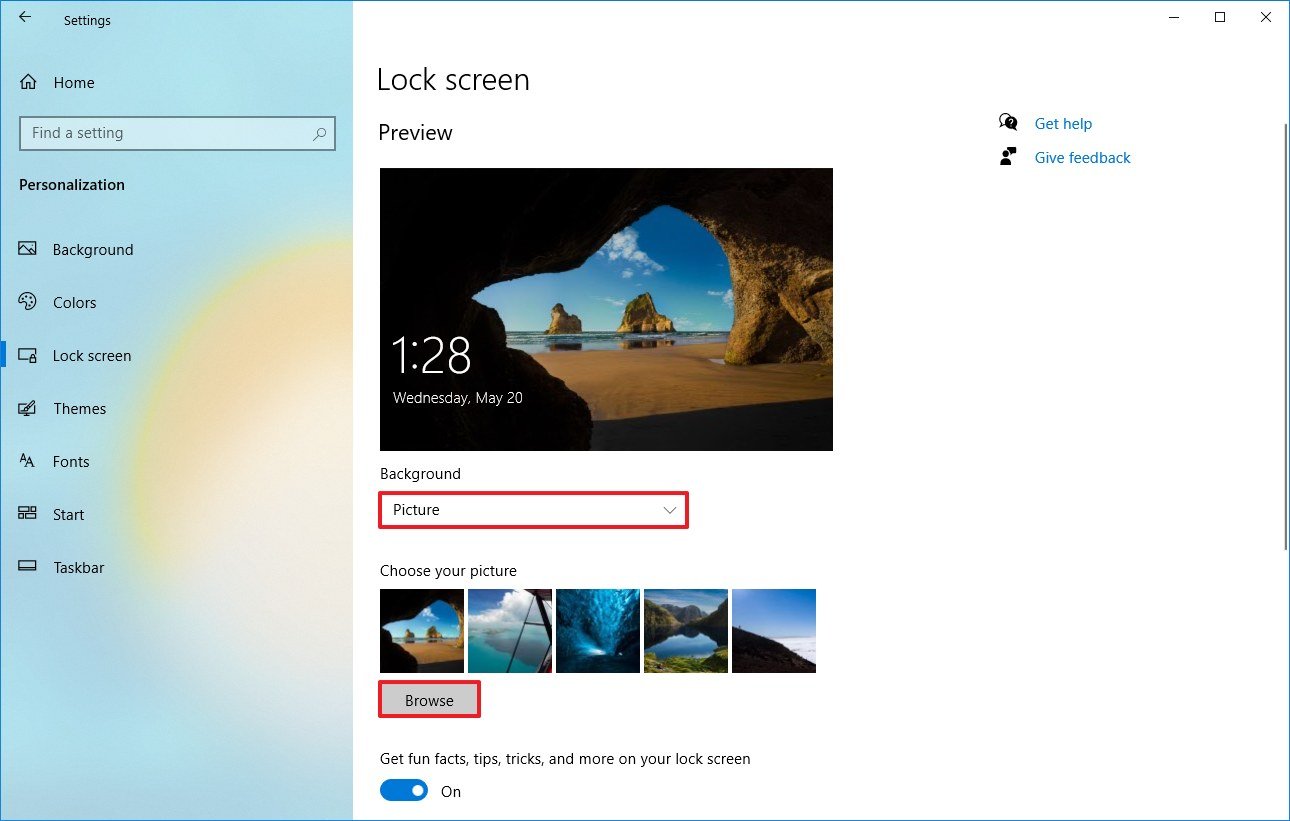
- Select the motion-picture show you lot want to apply.
- Click the Choose picture push button.
- (Optional) Plow off the Get fun facts, tips, tricks, and more on your lock screen selection.
Once you complete the steps, the Lock screen volition testify the custom image that you selected.
Display slideshow on Lock screen
To show a collection of pictures in the Lock screen, use these steps:
- Open Settings.
- Click on Personalization.
- Click on Lock screen.
- Apply the "Background" drop-down carte, and select the Slideshow option.
- Click the Add together a folder push to locate the folder with the images y'all want to see.Quick tip: You lot can delete a source by selecting the item from the list and clicking the Remove button.
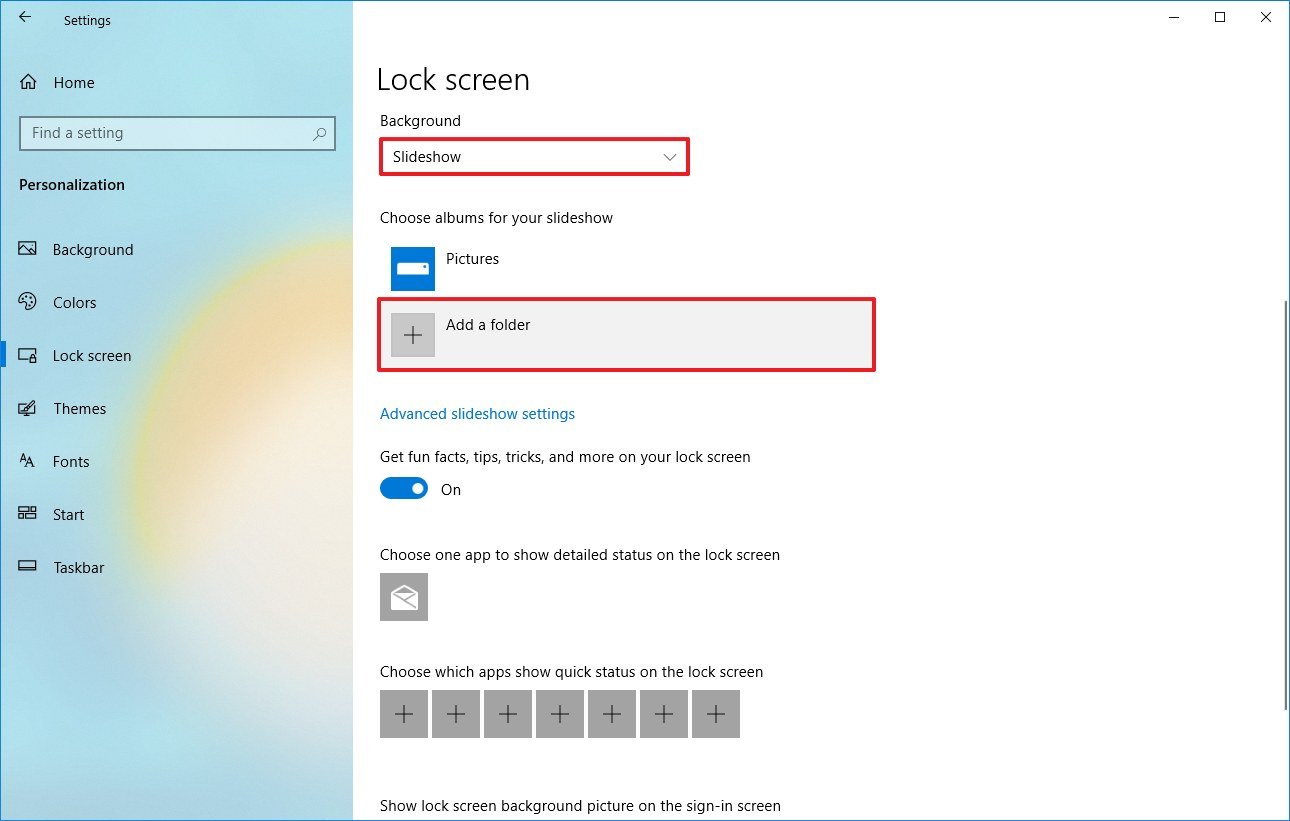
- (Optional) Plow off the Get fun facts, tips, tricks, and more on your lock screen option.
- (Optional) Click the Advanced slideshow settings choice.
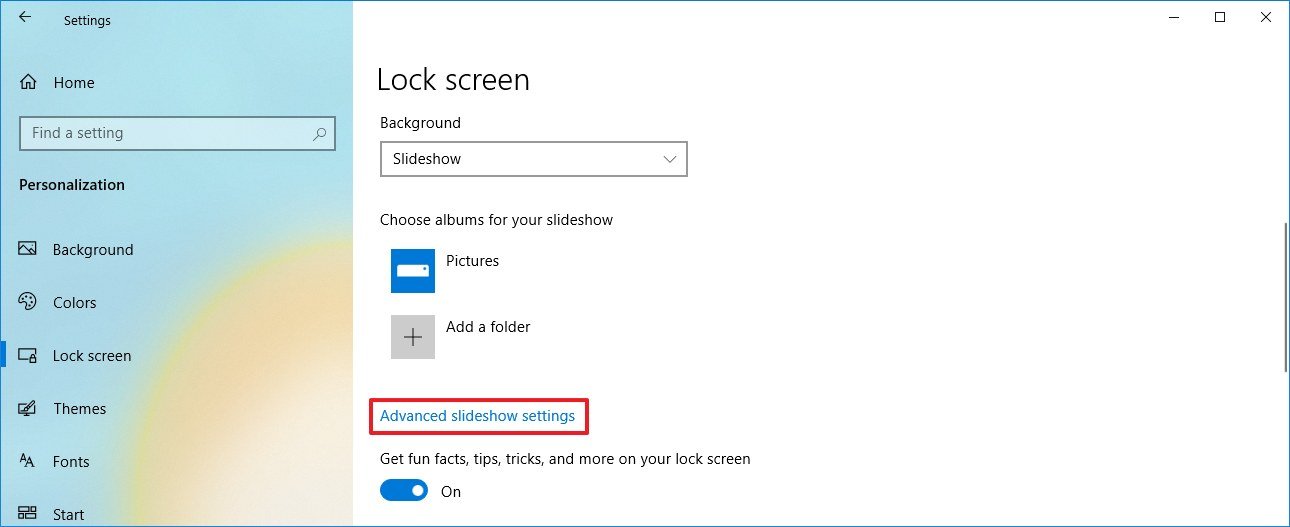
- Select the slideshow settings:
- Include Camera Roll folders from this PC and OneDrive.
- Only use pictures that fit my screen.
- When my PC is inactive, evidence lock screen instead of turning off the screen.
- Use the "Plow off screen later on the slideshow has played for" drop-down carte and select when turning off the monitor.
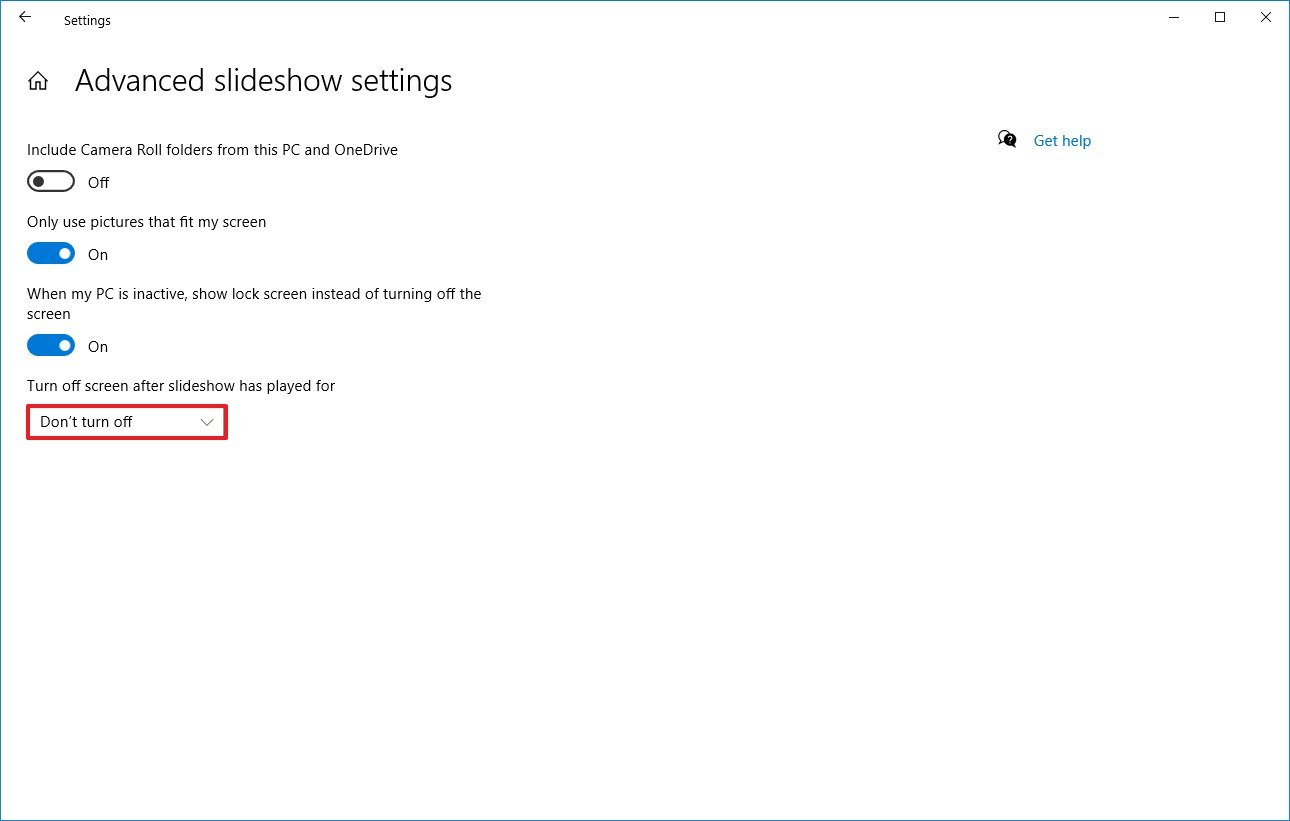
Subsequently you lot complete the steps, every time y'all power on your device, the Lock screen will evidence a different image background from the drove.
Command app notifications on Lock screen
Certain apps can display information and status in the Lock screen, and you can control what app y'all desire to run into notifications.
To add together or remove app notifications in your lock screen, apply these steps:
- Open up Settings.
- Click on Personalization.
- Click on Lock screen.
- Under the "Choose one app to show detailed status on the lock screen" section, click the plus (or app icon) button and select an app. (Typically, you desire to select Post or Calendar.)
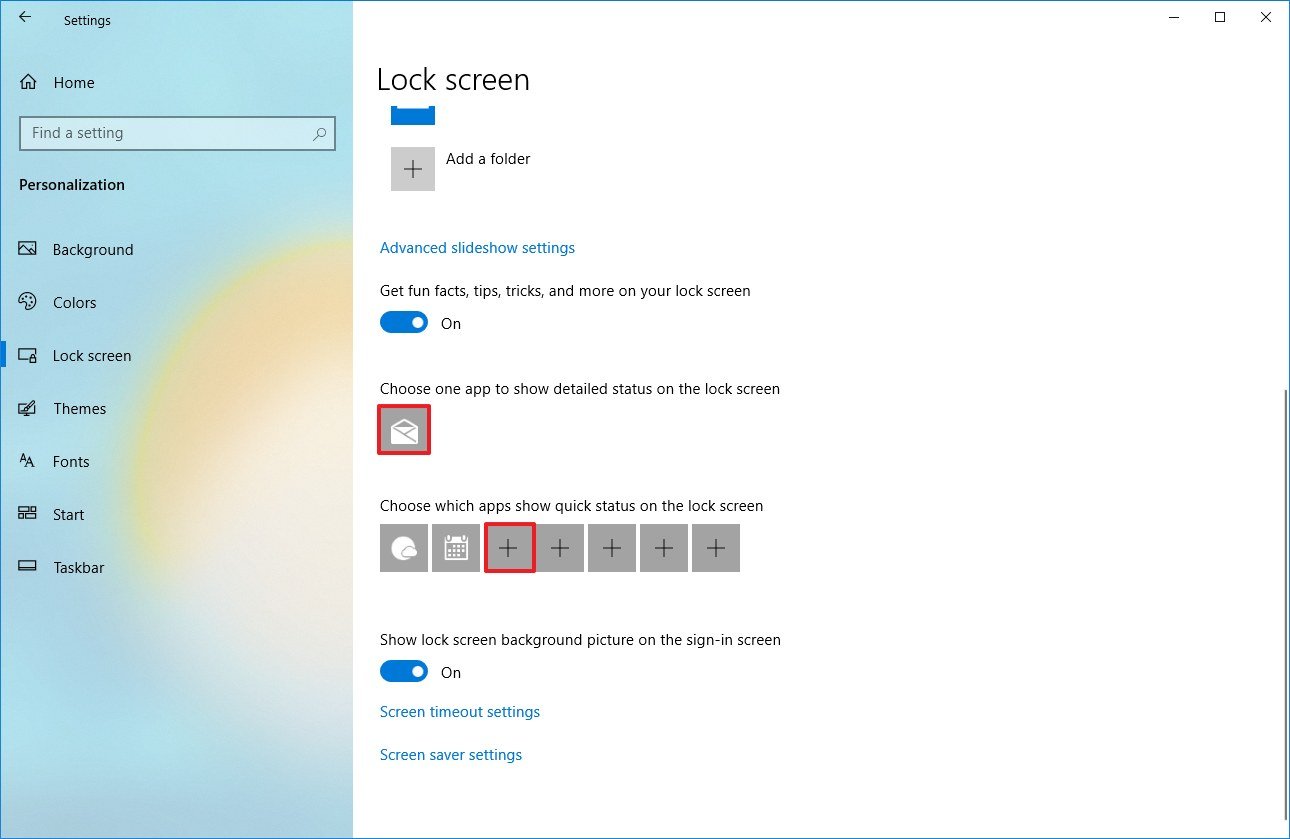
- Under the "Choose which apps show quick condition on the lock screen" department, click the plus (or app icon) button and select an app.
- Repeat stride No. five to show up to vi apps with quick status on the lock screen.
One time you complete the steps, the Lock screen will display notifications for apps in the bottom-left corner of the screen.
Disable Sign-in screen groundwork
Windows 10 shows the aforementioned lock screen background on the sign-in screen, and yous can disable this behavior if you only want to prove a solid color background.
To disable the Sign-in screen background, use these steps:
- Open up Settings.
- Click on Personalization.
- Click on Lock screen.
- Turn off the Show lock screen background picture show on the sign-in screen toggle switch.
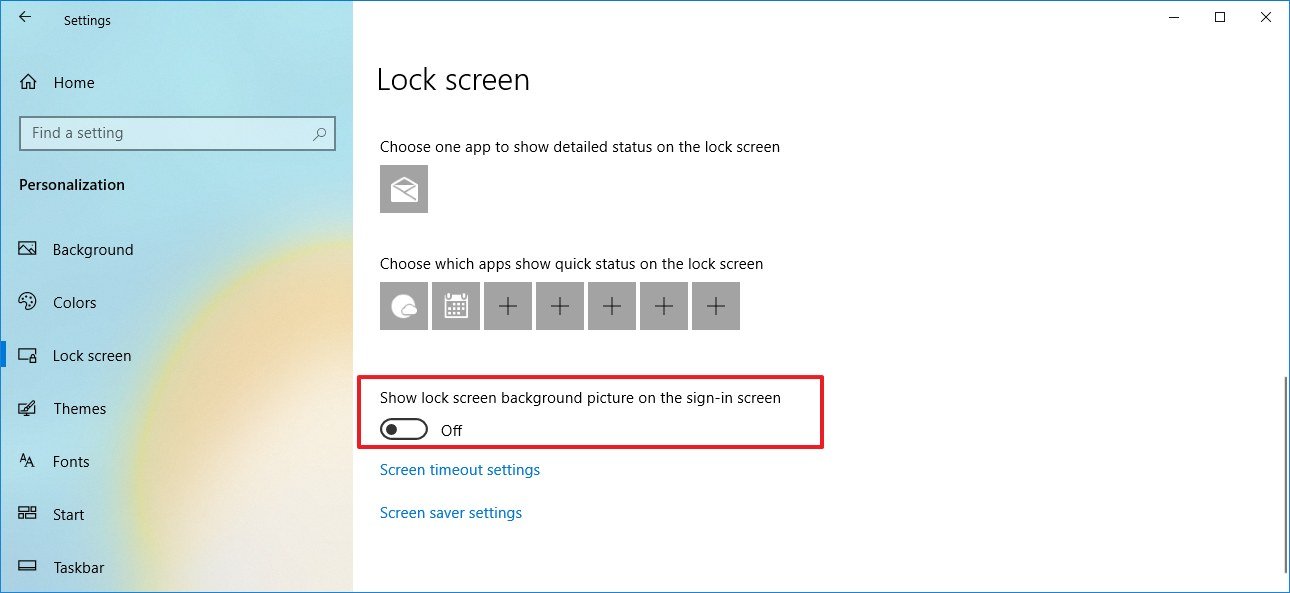
Afterwards y'all complete the steps, the Sign-in screen volition brandish a solid colour as the background.
How to change themes on Windows 10
On Windows 10, a theme is a small parcel containing one or more background images, accent color, and in some cases, sounds, and you tin cull from hundreds of them from the Microsoft Store.
To download and install a new theme on Windows ten, use these steps:
- Open Settings.
- Click on Personalization.
- Click on Themes.
- Click the Go more themes in the Microsoft Store option.
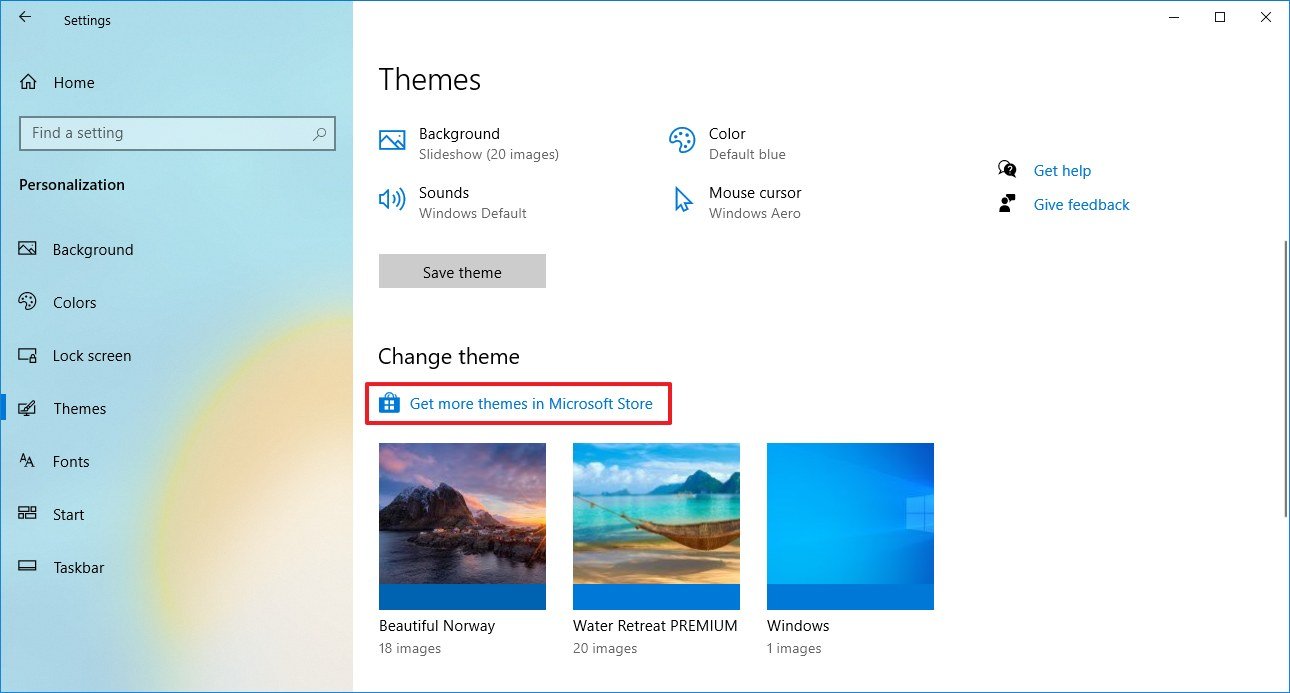
- Select the theme you desire.
- Click the Get button.
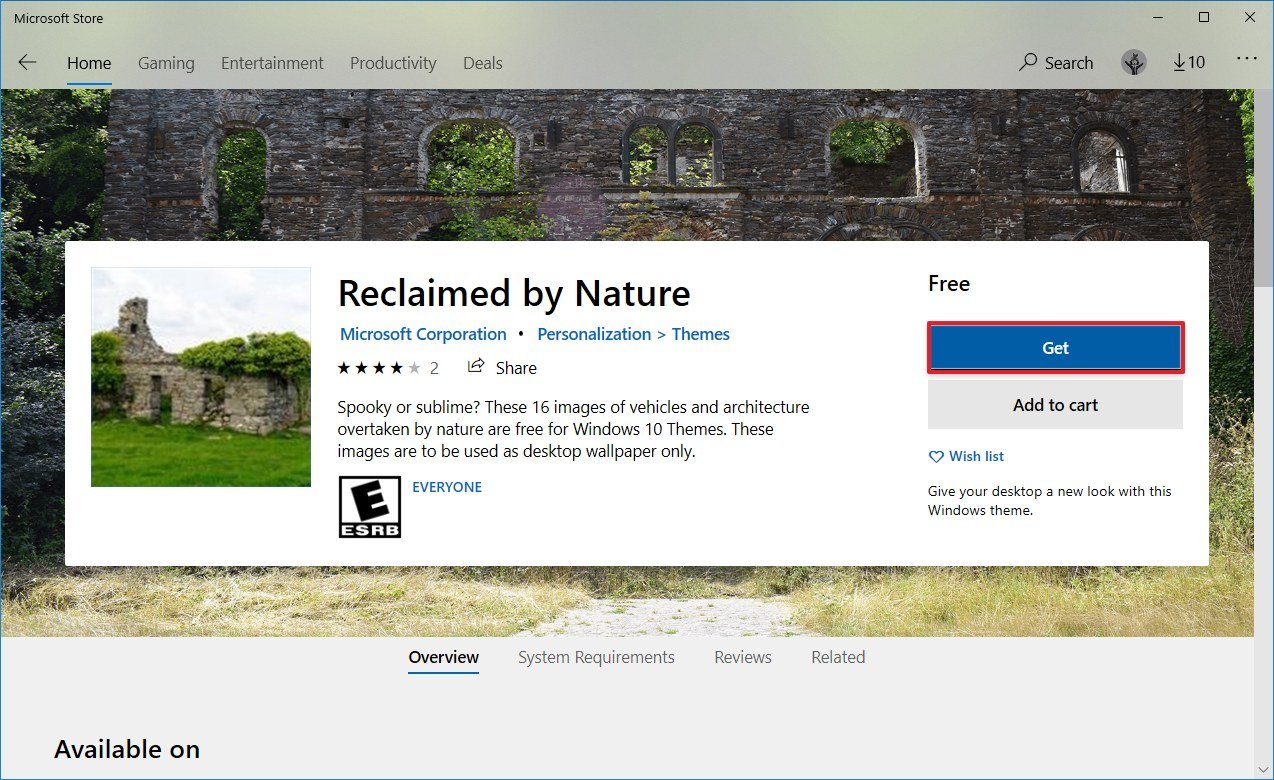
- Click the Apply button.
- Click the newly added theme to apply it from the "Themes" page.
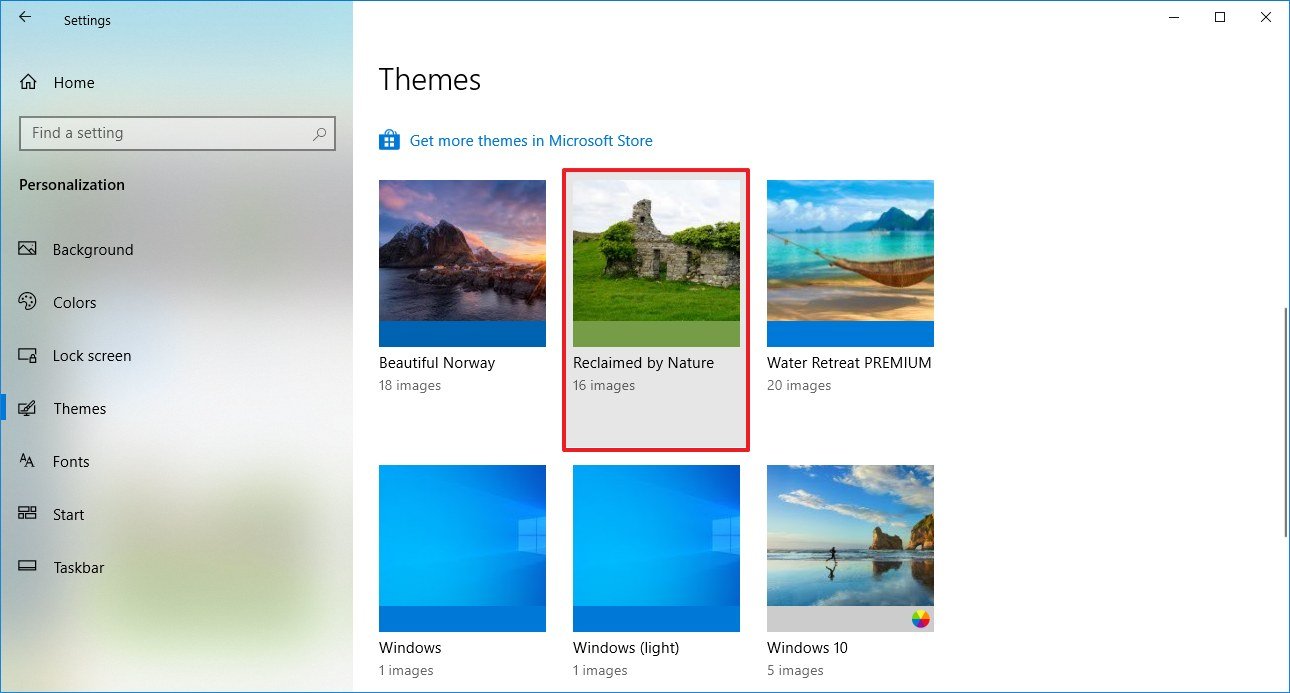
Once you lot complete the steps, the theme will use and update the groundwork with a collection of images and custom accent colour.
The Start menu is an essential component of Windows 10, as information technology's the experience where you can find your apps, settings, and files.
There are a number of means to customize the menu, some of the settings tin be customized from Start itself, and some additional options can be configured through the Settings app.
To customize the Start menu with the Settings app, apply these steps:
- Open Settings.
- Click on Personalization.
- Click on Offset.
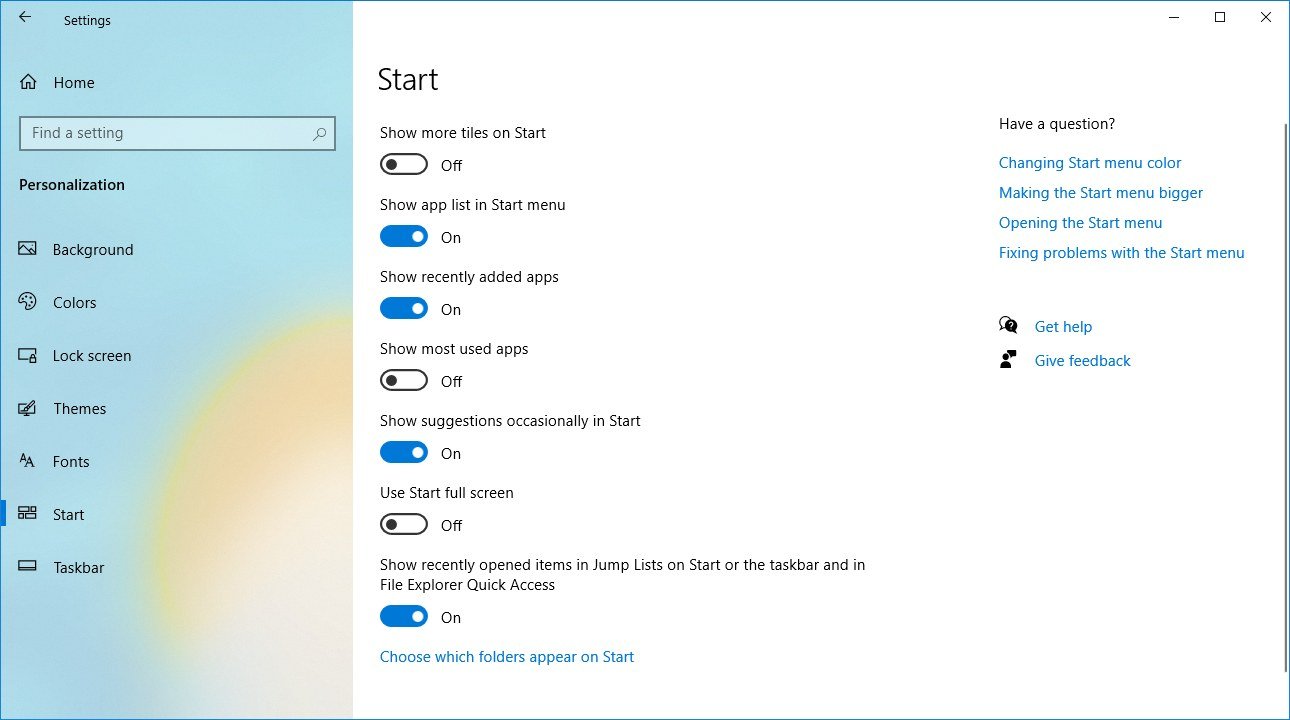
The First page includes several options you can customize, including:
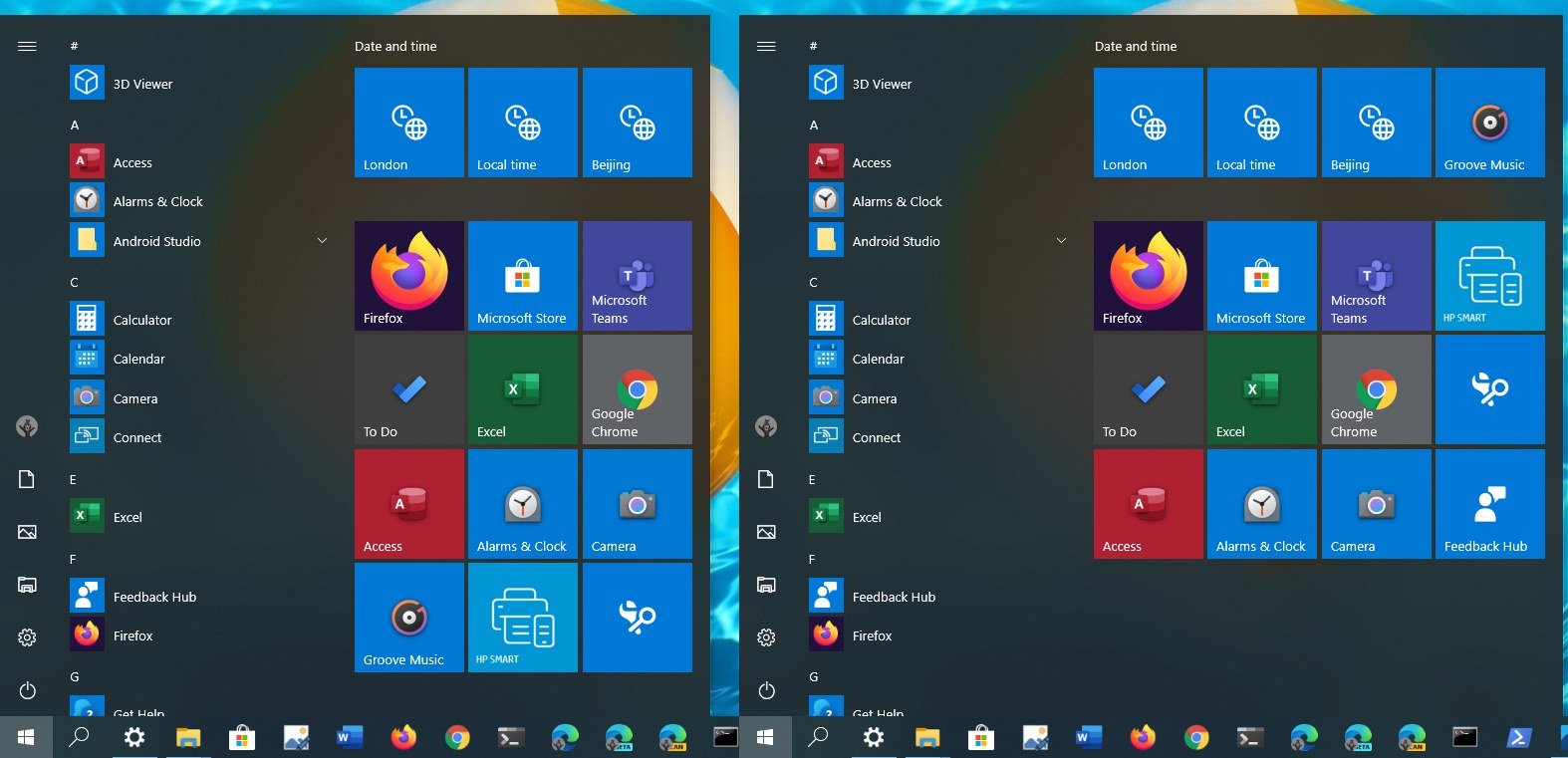
- Show more tiles on Start — Allows yous to add a fourth cavalcade of tiles to fit up to 8 (minor) tiles in a unmarried row.
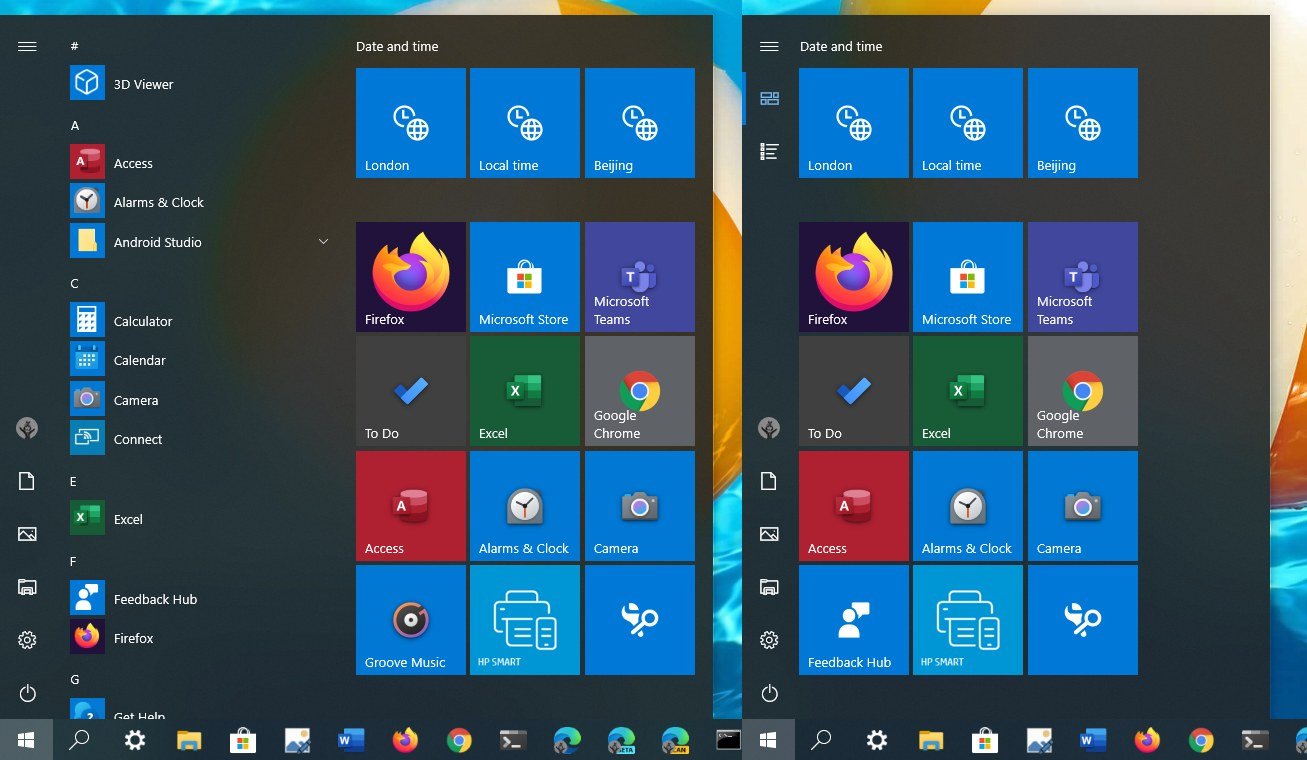
- Show app list in Start menu — Disabling this pick will remove the all apps list with merely access to your pinned Live Tiles. You can go on to access the apps clicking the All apps button on the elevation-left, or typing a search as you open the menu.
- Show recently added apps — If you lot're not interested in seeing the "Recently added" list, yous can turn off this choice.
- Prove almost used apps — The Outset menu lists your more frequently used apps, just you lot can disable this option if you only want to see all the apps.
- Occasionally show suggestions in Start — Y'all can disable this selection to foreclose seeing recommendations from the Microsoft Store.
- Use total screen — Enables a Windows eight.1 Start screen-like feel to stretch the bill of fare across the desktop, allowing you lot to see more pinned tiles without scrolling.
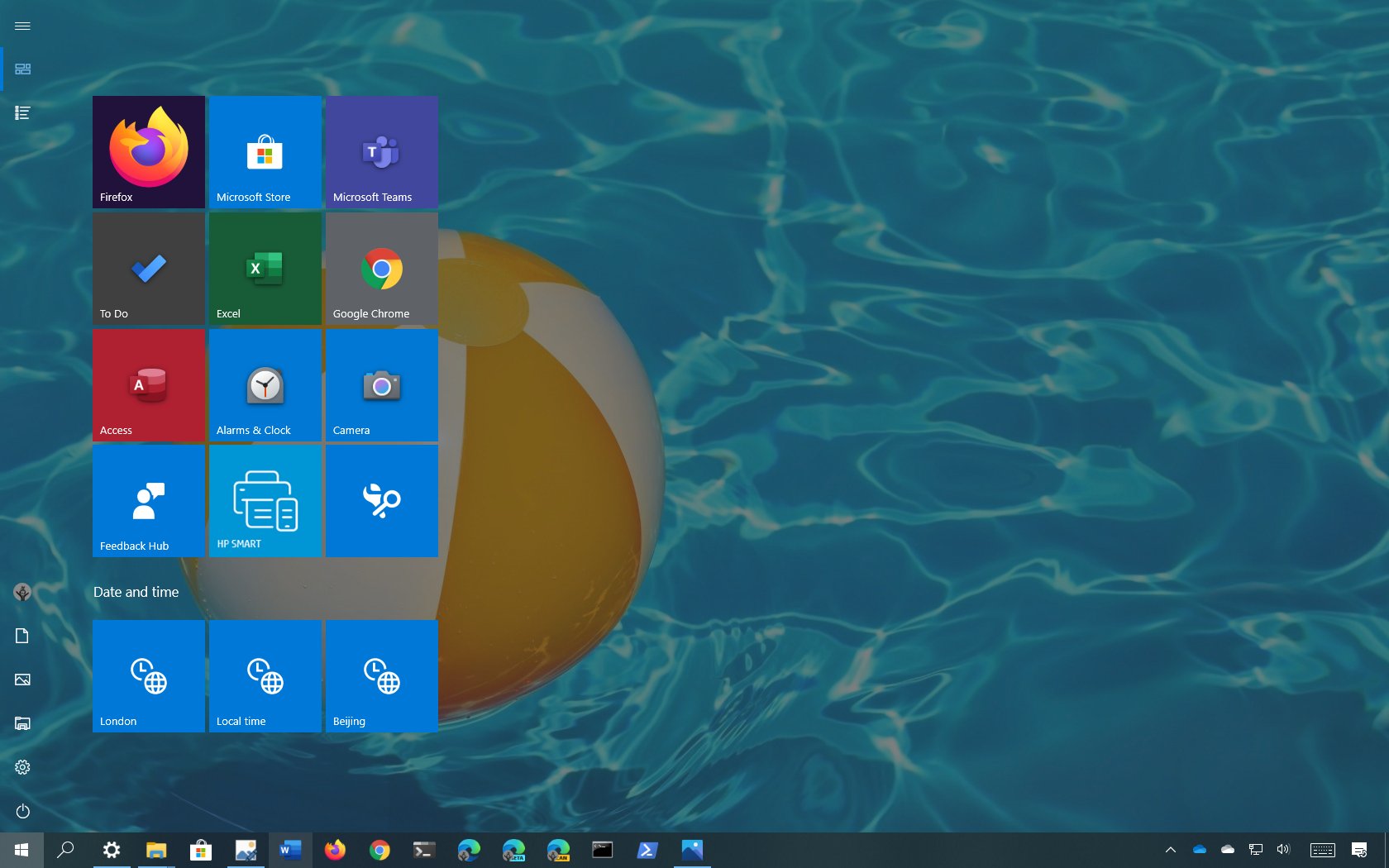
Command folders on Offset
To add or remove quick folder admission from the Start carte, use these steps:
- Open Settings.
- Click on Personalization.
- Click on Start.
- Click the Cull which folders appear on Start option.
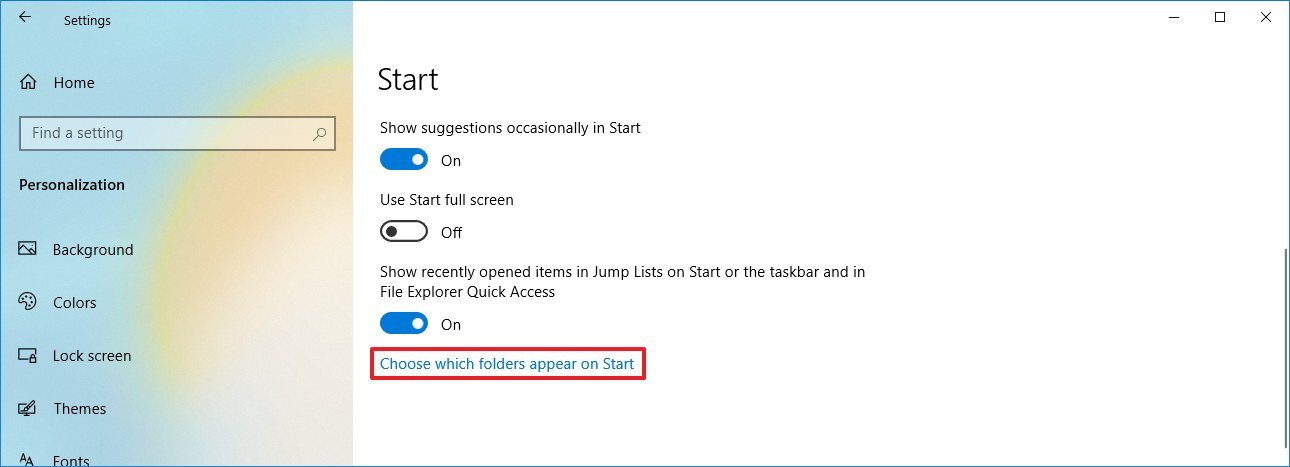
- Turn on or off the toggle switches for the items you want to exist listed in the Start menu.
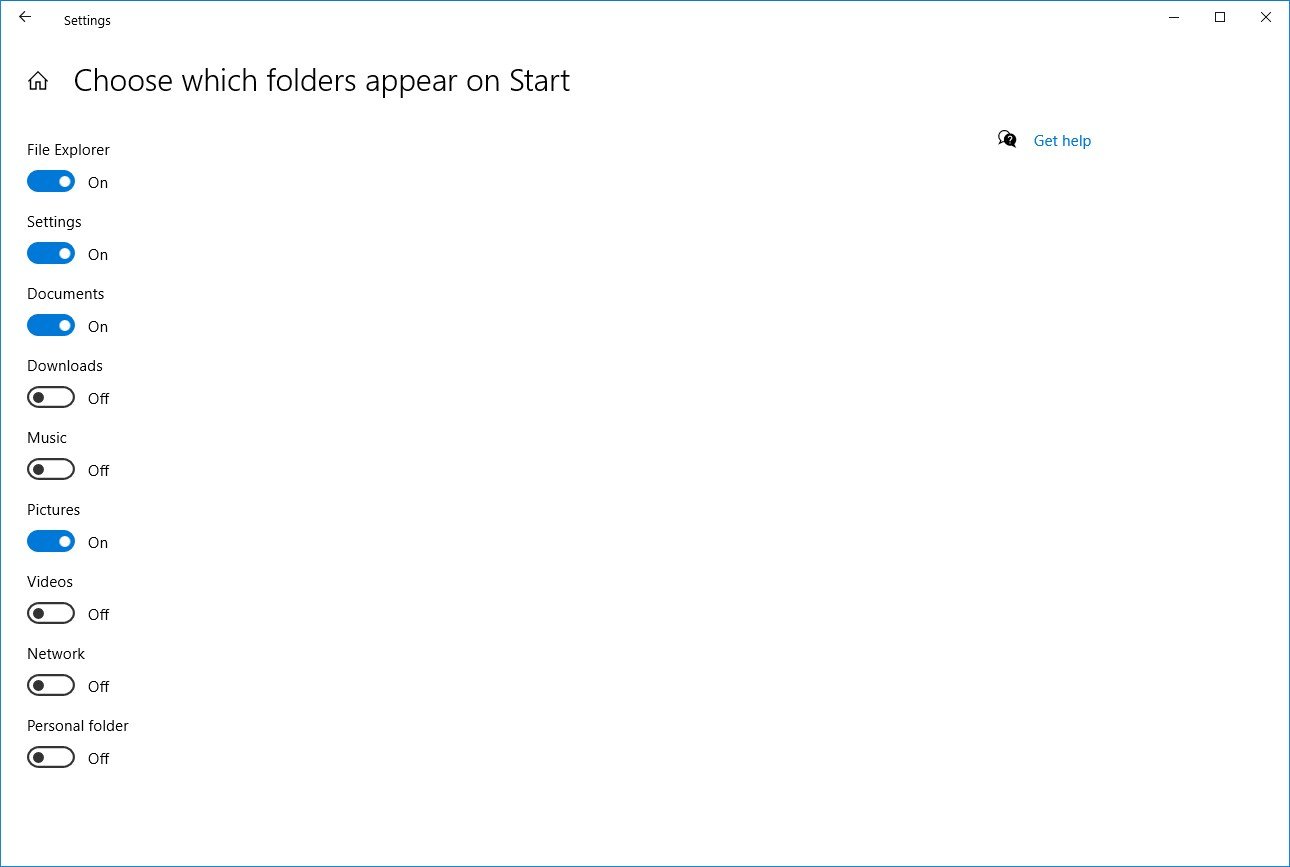
In one case you complete the steps, the left rail menu volition just include access to the folder you specified.
Customize Live Tiles
In add-on to the customization options bachelor, you can too personalize the experience from inside the card.
Resizing Start
You tin can resize the bill of fare vertically and horizontally by stretching the edges outwards using the mouse.
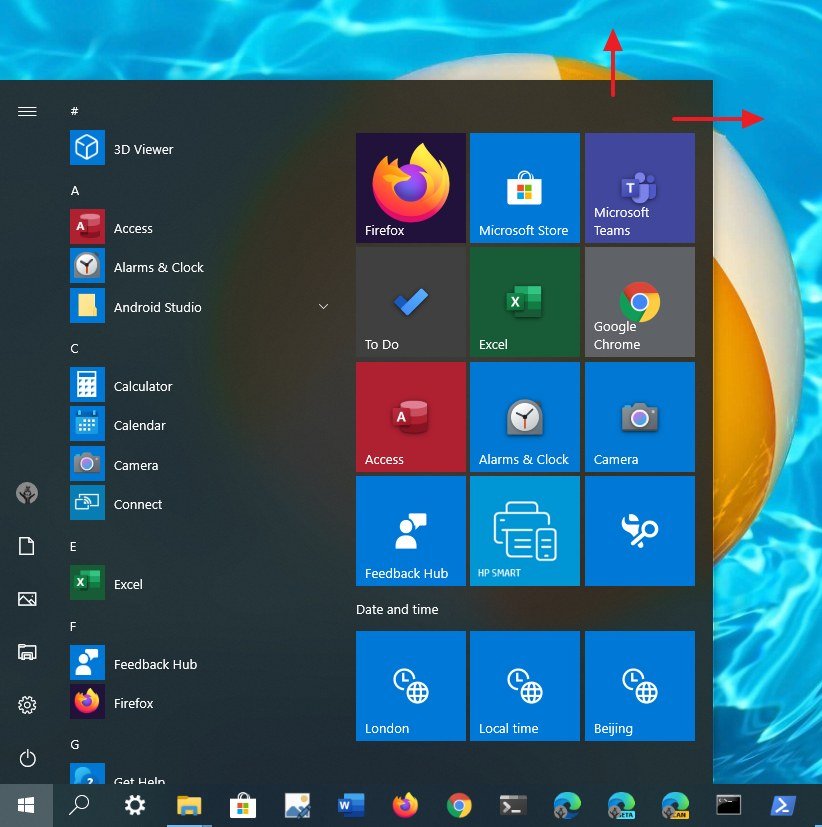
You can also open the menu and utilize the Ctrl + arrow keys keyboard shortcut to alter the pinnacle and width.
Working with tiles, folders, and groups
The Get-go card provides the power to elevate tiles around, group tiles together in sections, and create folders anywhere on the menu.
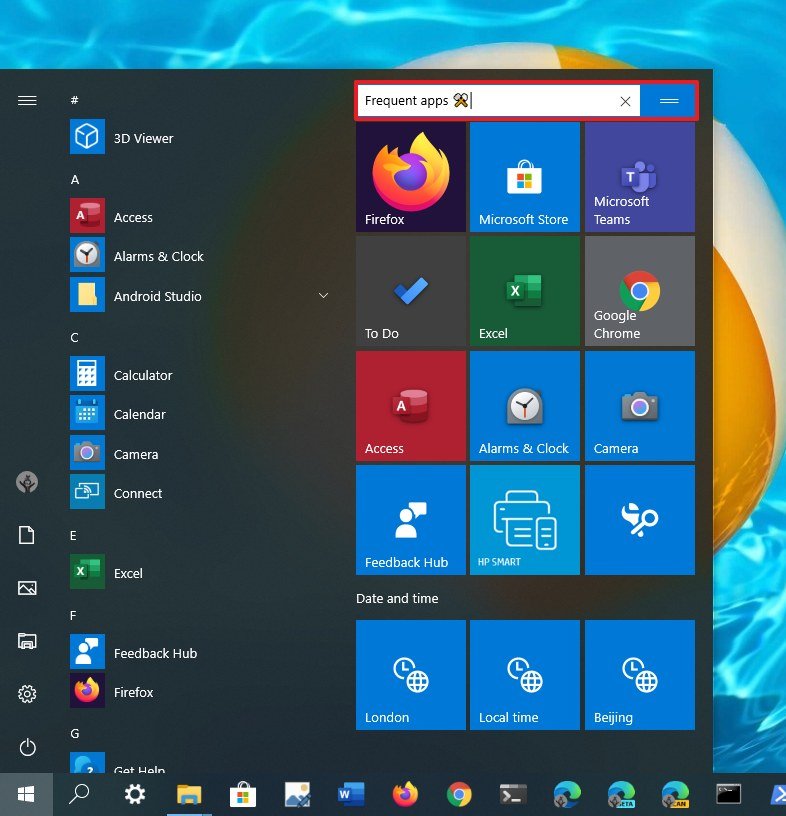
To improve organize your app tiles, you can create a grouping by dragging tiles into an empty space. You can even click the header of the grouping to alter the name to annihilation that makes more sense for the grouping — and yes, emojis are supported.
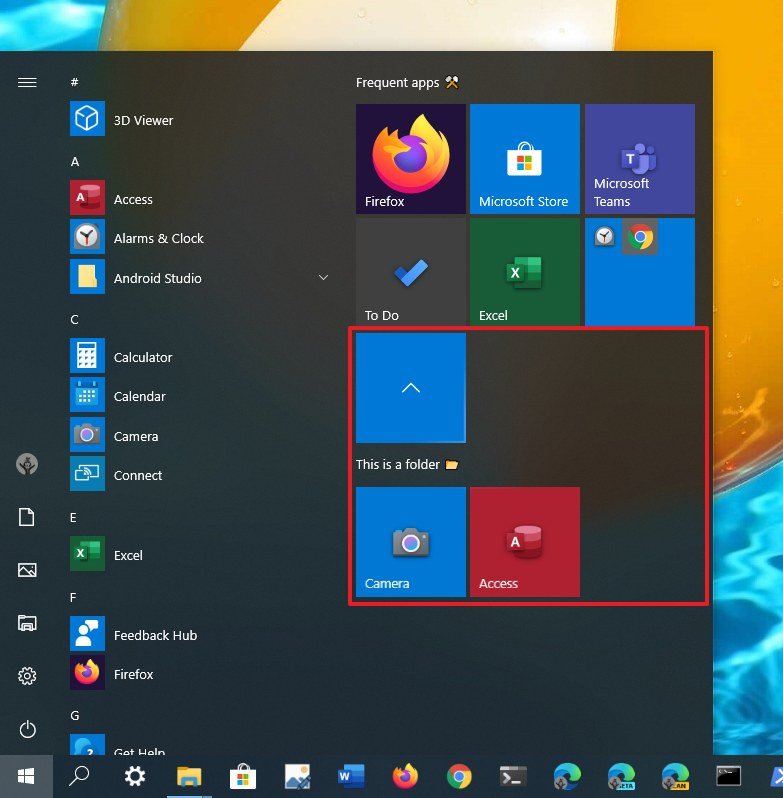
You lot tin can also create folders, which is another way to group tiles to optimize the Start menu space. You can create a new folder by dragging and dropping a tile on top of another tile. Then dropping more than items into the folder volition add them to the group.
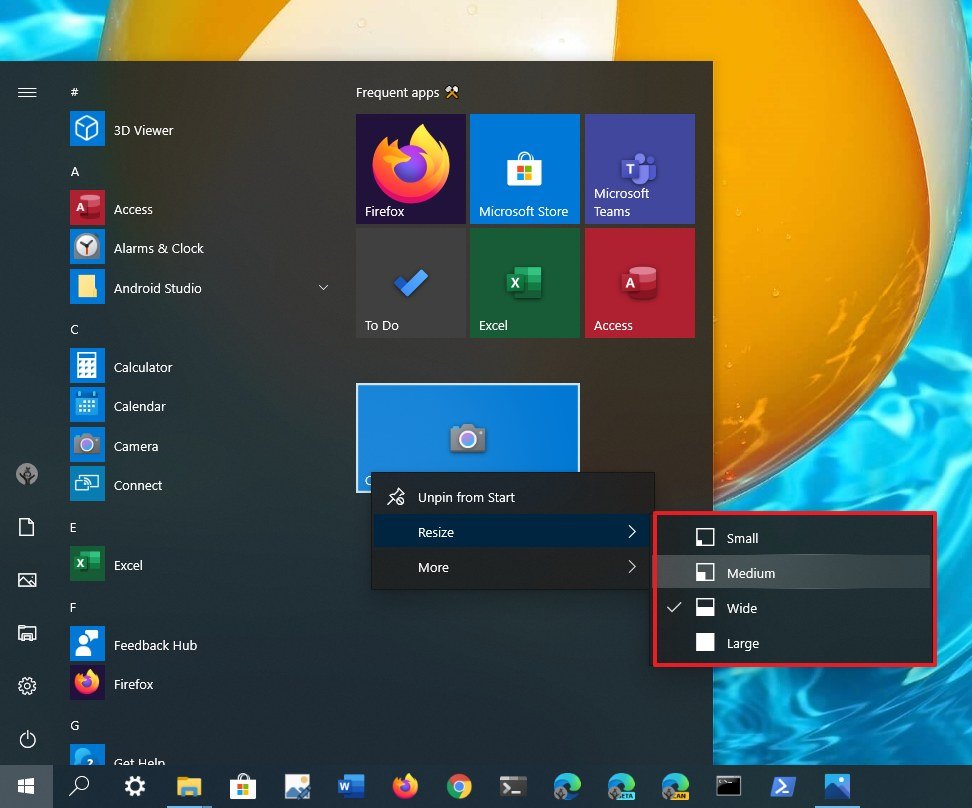
Live Tiles and folders include support for different sizes, which you can change right-clicking a tile, selecting the Resize menu, and choosing from one of the available sizes, including Small, Medium, Wide, or Large.
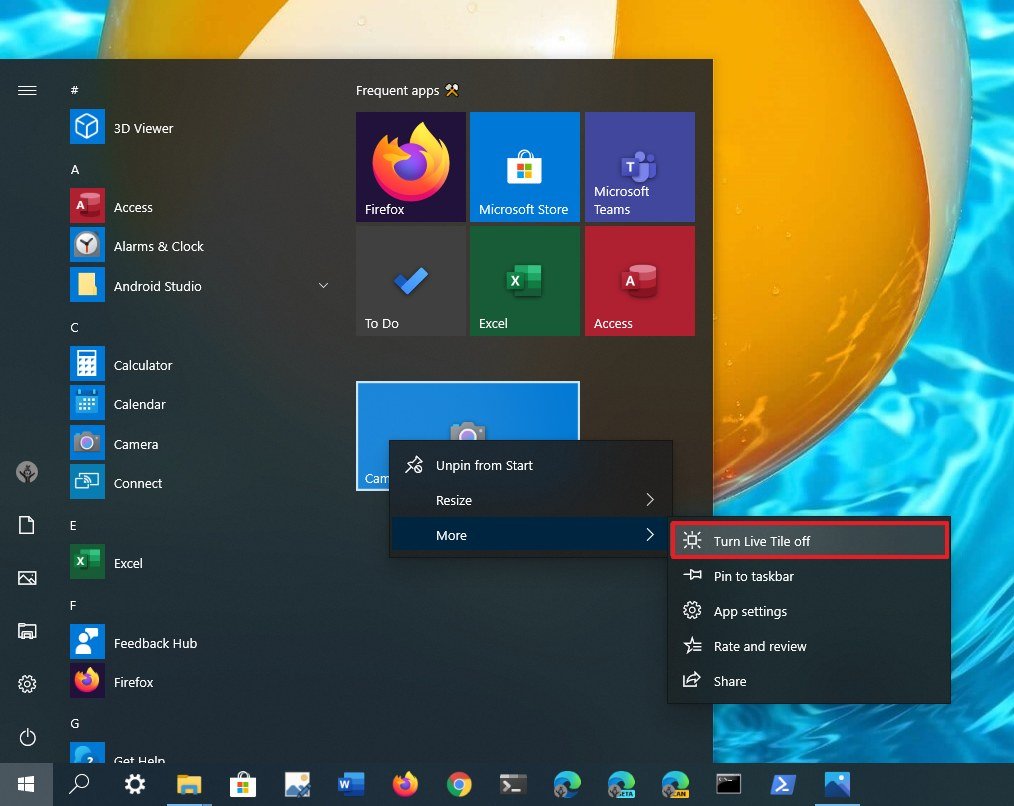
If you're non interested in live updates, right-click the tile, and select the More menu, and choose the Turn Alive Tile off option. As well, depending on the app, you may see boosted options, such every bit options to pin or unpin the taskbar, run information technology with administrator privileges, and more.
Windows 7 Start menu style
In the case that you prefer a more classic look, you tin always remove all the tiles to end up only with the all apps listing view, which is like to the menu style that was available on Windows seven.
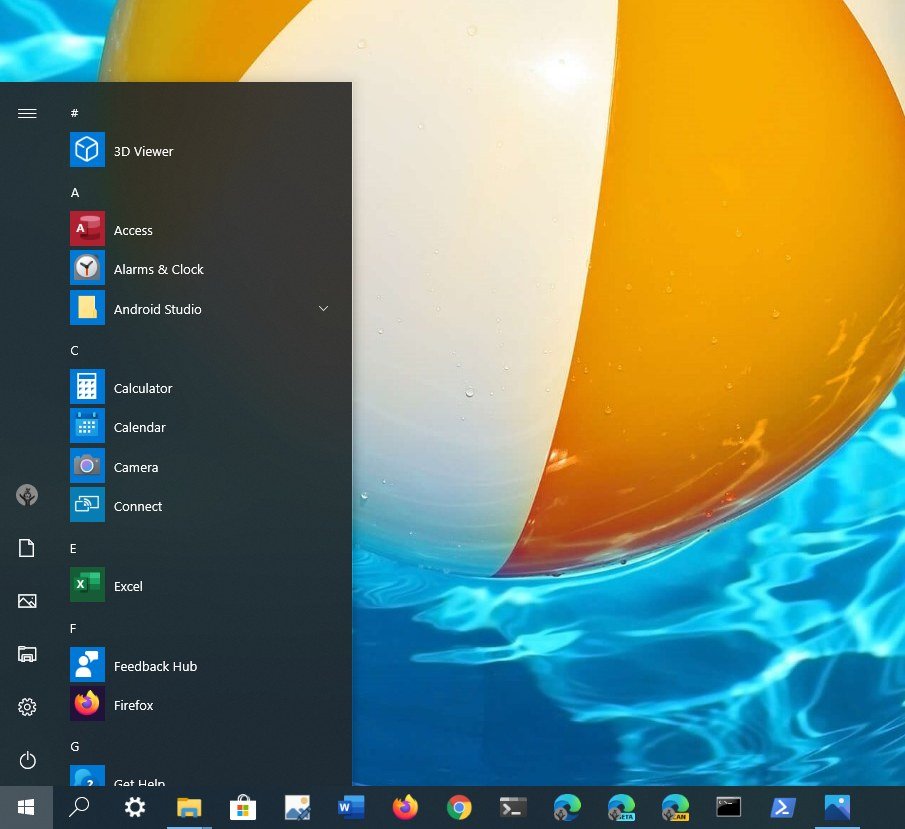
Windows 10 doesn't offer an option to hide the tile section, and so you'll take to correct-click each tile and select the Unpin from Start pick to attain the desired look.
How to customize the taskbar on Windows ten
The taskbar is perhaps one of the essential components on Windows 10, and you can customize it in many ways using the Settings app and with options available within the experience.
Change taskbar settings
To change bones taskbar settings on Windows x, use these steps:
- Open Settings.
- Click on Personalization.
- Click on Taskbar.
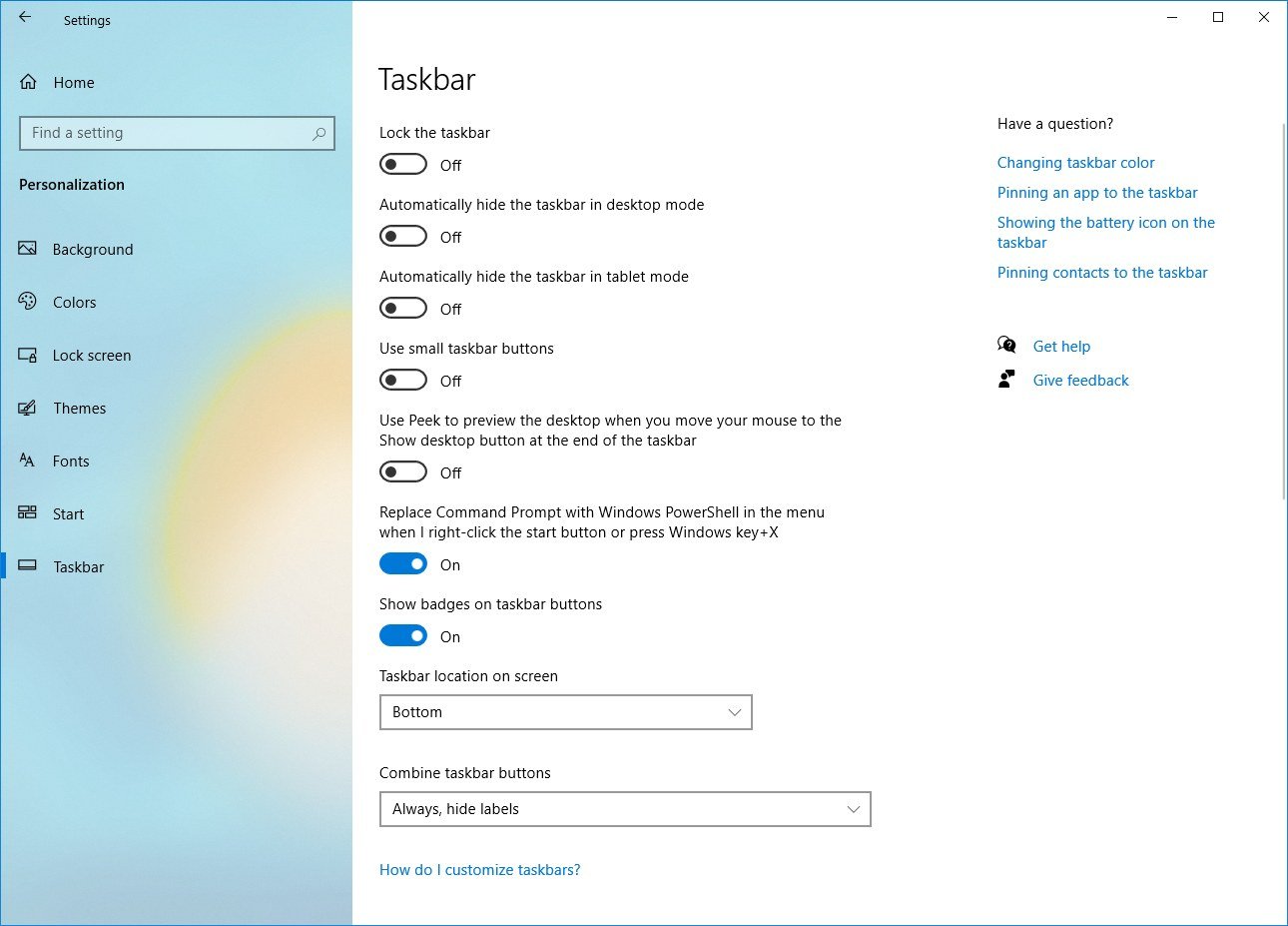
In the Taskbar page, you lot can change many basic settings, including:
- Lock the taskbar — When enabled, y'all tin't movement or resize the taskbar. If disabled, yous can click and drag the taskbar to any side of the screen, and you drag the edge of the bar to modify the superlative.
- Automatically hide the taskbar in desktop mode — If enabled, the bar volition stay hidden, unless y'all're actively interacting with it in normal mode.
- Automatically hide the taskbar in tablet way — If enabled, the bar will stay hidden, unless you're actively interacting with it in tablet fashion.
- Utilise small taskbar buttons — Allows y'all to utilise smaller buttons to reduce the footprint of the taskbar.
- Bear witness badges on taskbar buttons — Apps in the taskbar tin can prove status notifications, and this option lets yous disable or enable the feature.
Modify taskbar location
Although you can modify the location of the taskbar by just dragging information technology around with the mouse, this page as well includes a drop-down card to relocate the bar anywhere y'all like.
To change the taskbar location, utilize these steps:
- Open Settings.
- Click on Personalization.
- Click on Taskbar.
- Employ the Taskbar location on screen drop-down menu and select the location:
- Left.
- Meridian.
- Right.
- Bottom.
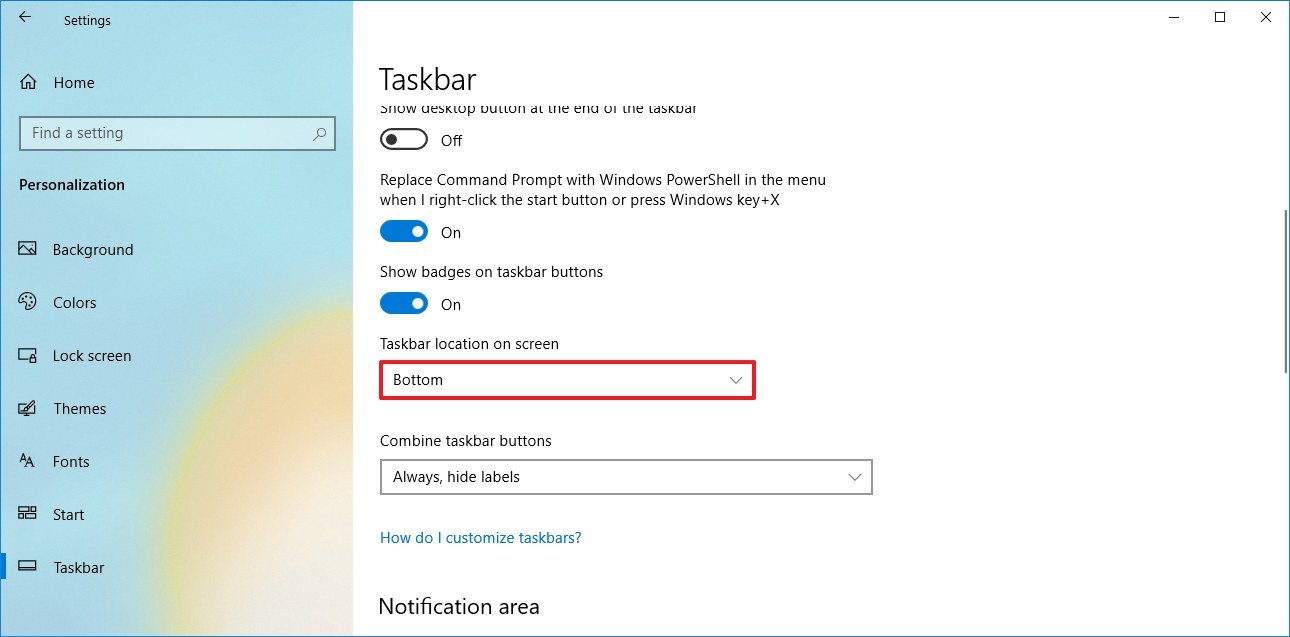
After you lot complete the steps, the taskbar volition relocate to the side of the screen you selected.
Customize taskbar visuals
The taskbar likewise lets y'all combine buttons in iii different ways, including always combine and hide their labels (default), show labels and combine buttons merely when the taskbar is full, and never combine and testify buttons labels.
To combine the taskbar buttons, employ these steps:
- Open up Settings.
- Click on Personalization.
- Click on Taskbar.
- Use the Combine taskbar buttons driblet-down menu and select the best pick for you lot:
- Always, hibernate labels.
- When taskbar is full.
- Never.
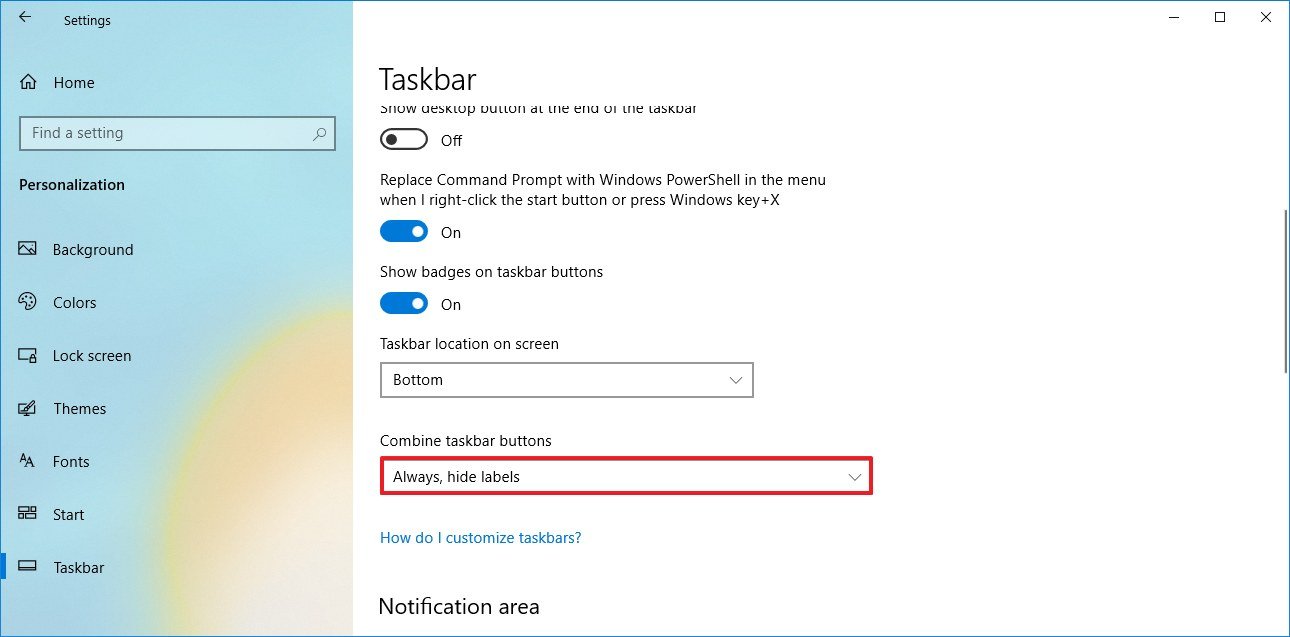
Once you lot complete the steps, the taskbar the changes volition apply accordingly.
Customize notification area
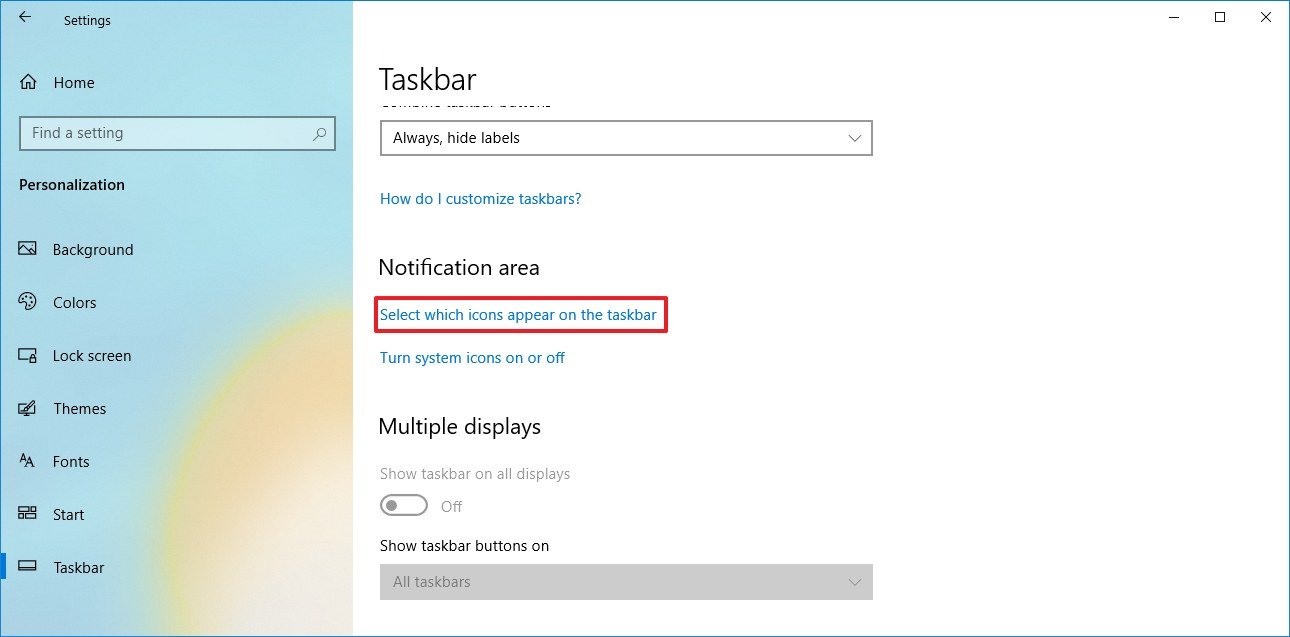
The bottom-right corner of the taskbar is where the notification area is located, and it unremarkably gets clutter with system and app icons. Still, yous can customize it to show only the icons you need using these steps:
- Open Settings.
- Click on Personalization.
- Click on Taskbar.
- Under the "Notification area" section, click the Select which icons announced on the taskbar link.
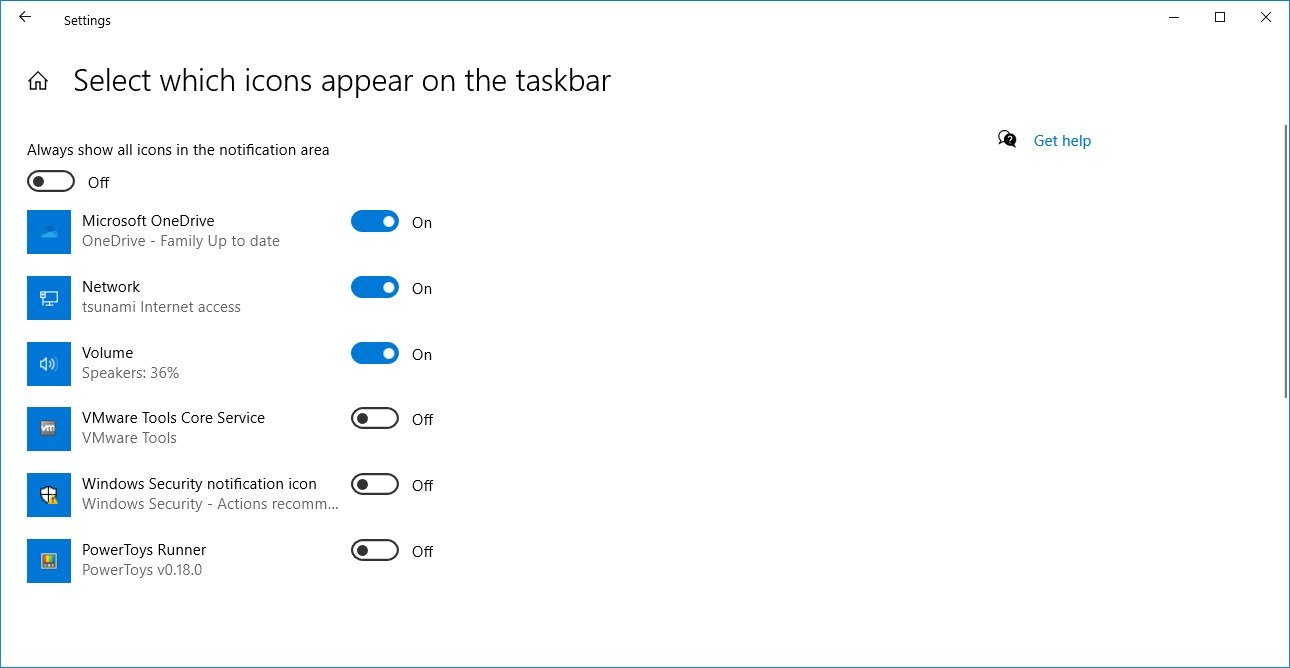
- Turn on the toggle switch for each icon you lot want to appear in the lesser-right corner of the screen.Quick tip: At that place's likewise a toggle switch to alwas bear witness all icons in the notification area, but it'll ataxia the taskbar reducing the space to pivot apps.
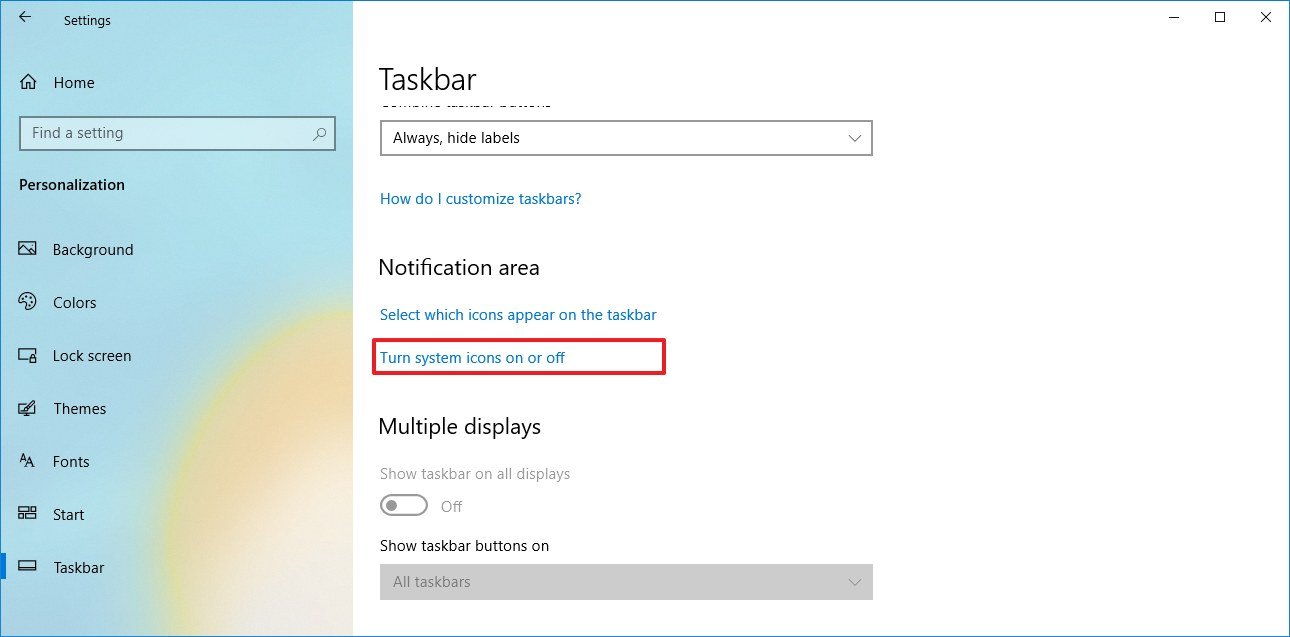
- Under the "Notification area" section, click the Turn system icons on or off link.
- Turn on the toggle switch for each system icons (such as Clock, Book, and Network) that will announced in the bottom-right corner of the screen.
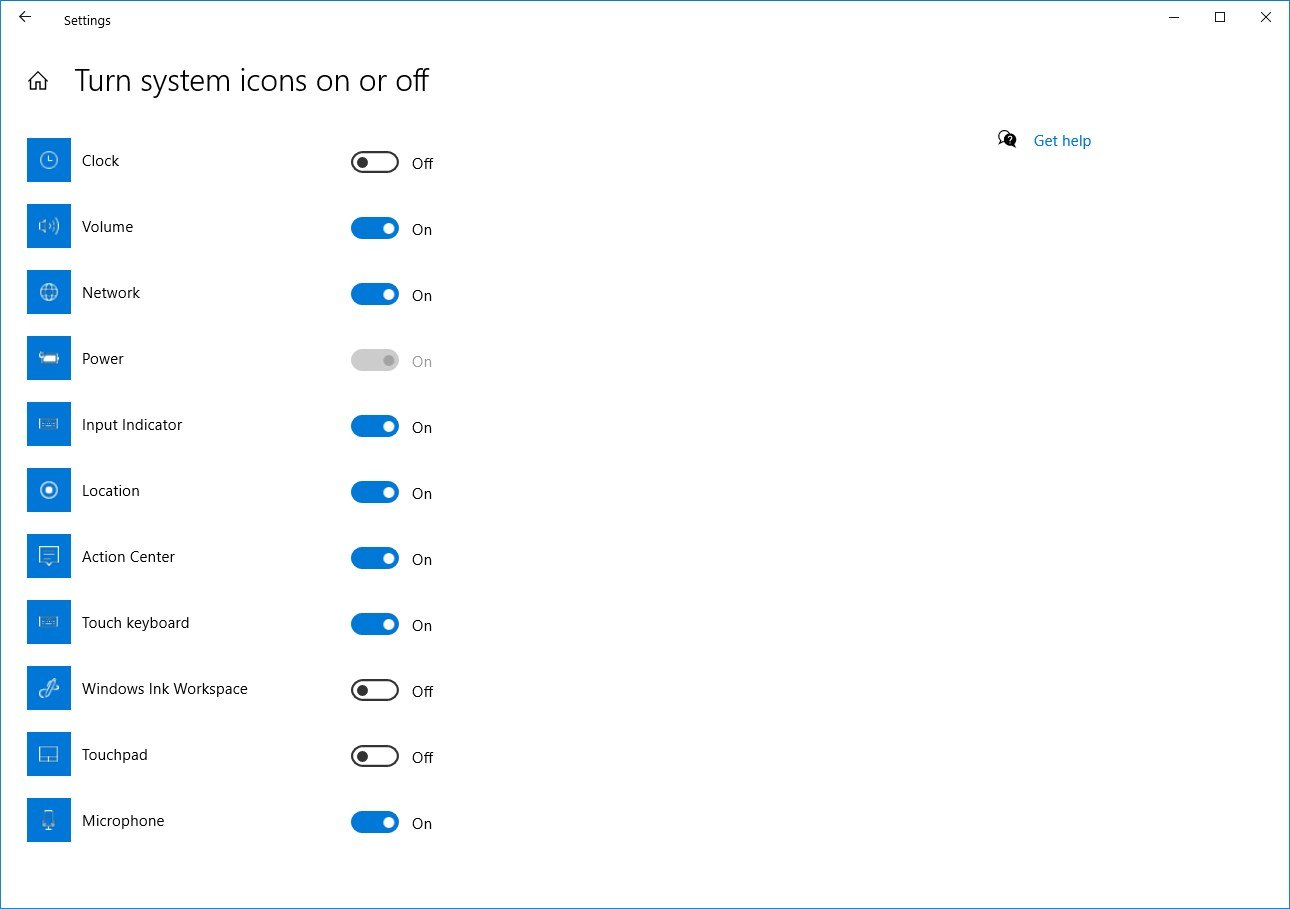
After you complete these steps, only the icons you need will announced in the notification area.
Customize taskbar for multiple displays
If you have a multi-monitor setup, the Taskbar page as well includes additional settings to show the bar on all displays, choose where apps push appear, and combine buttons on other taskbars.
To customize the taskbar for multiple displays, employ these steps:
- Open Settings.
- Click on Personalization.
- Click on Taskbar.
- Under the "Multiple displays" section, plow on the Show taskbar on all displays toggle switch.
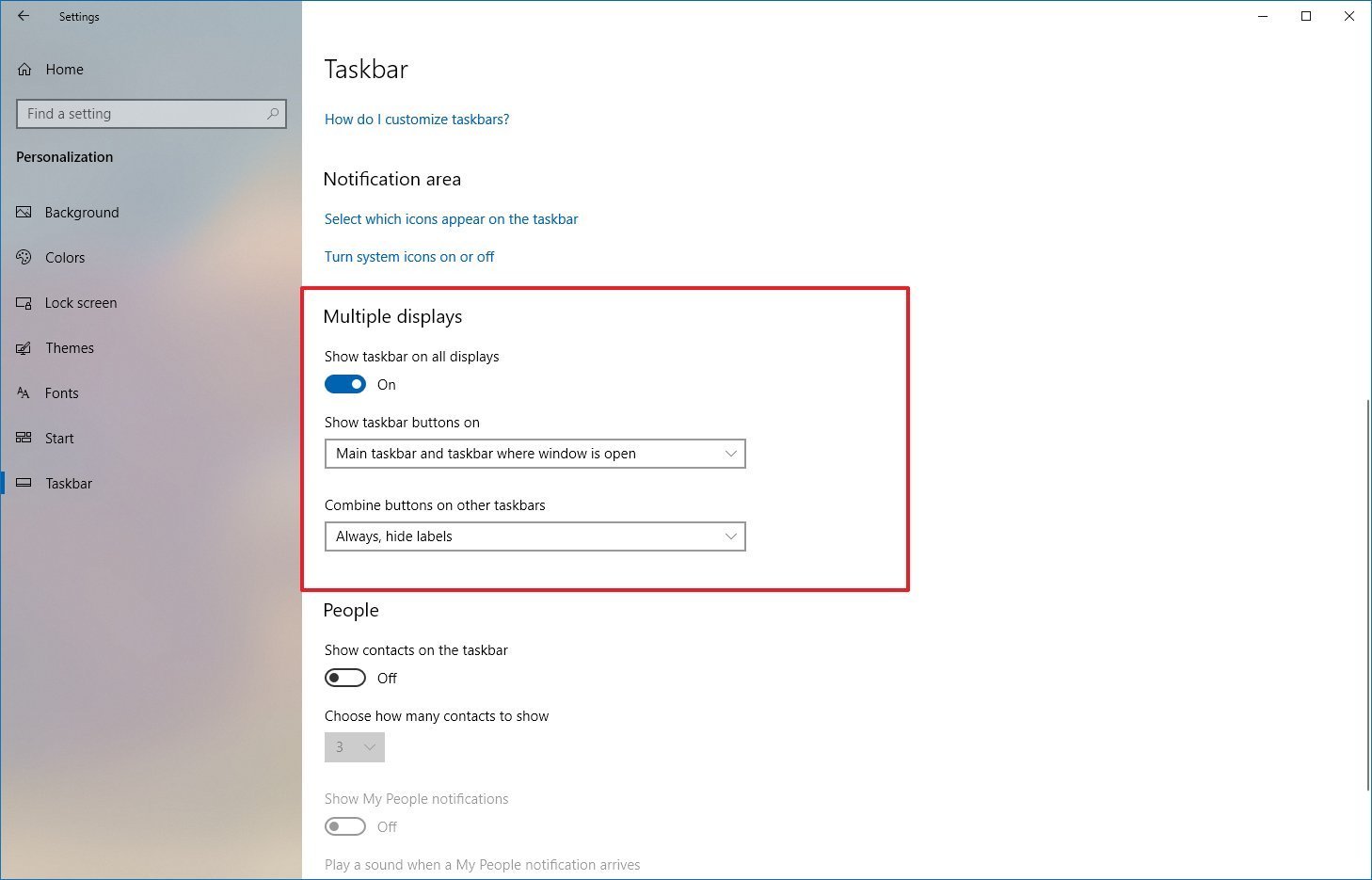
- (Optional) Employ the Show taskbar button on the drop-down carte and select in which displays the buttons should appear:
- All taskbars.
- Principal taskbar and taskbar where window is open.
- Taskbar where window is open.
- (Optional) Use the Combine buttons other taskbars drop-downward menu and select the all-time option for you:
- Ever, hibernate labels.
- When taskbar is full.
- Never.
Once you consummate the steps, the taskbar will display on all the monitors co-ordinate to your settings pick.
Disable My People
My People is a new feel that makes it easier to connect with people yous know, but it hasn't gained popularity, and now, information technology'south a deprecated characteristic.
If you have My People enabled, you tin can disable it using these steps:
- Open Settings.
- Click on Personalization.
- Click on Taskbar.
- Nether "People," turn off the Show contacts on the taskbar toggle switch.
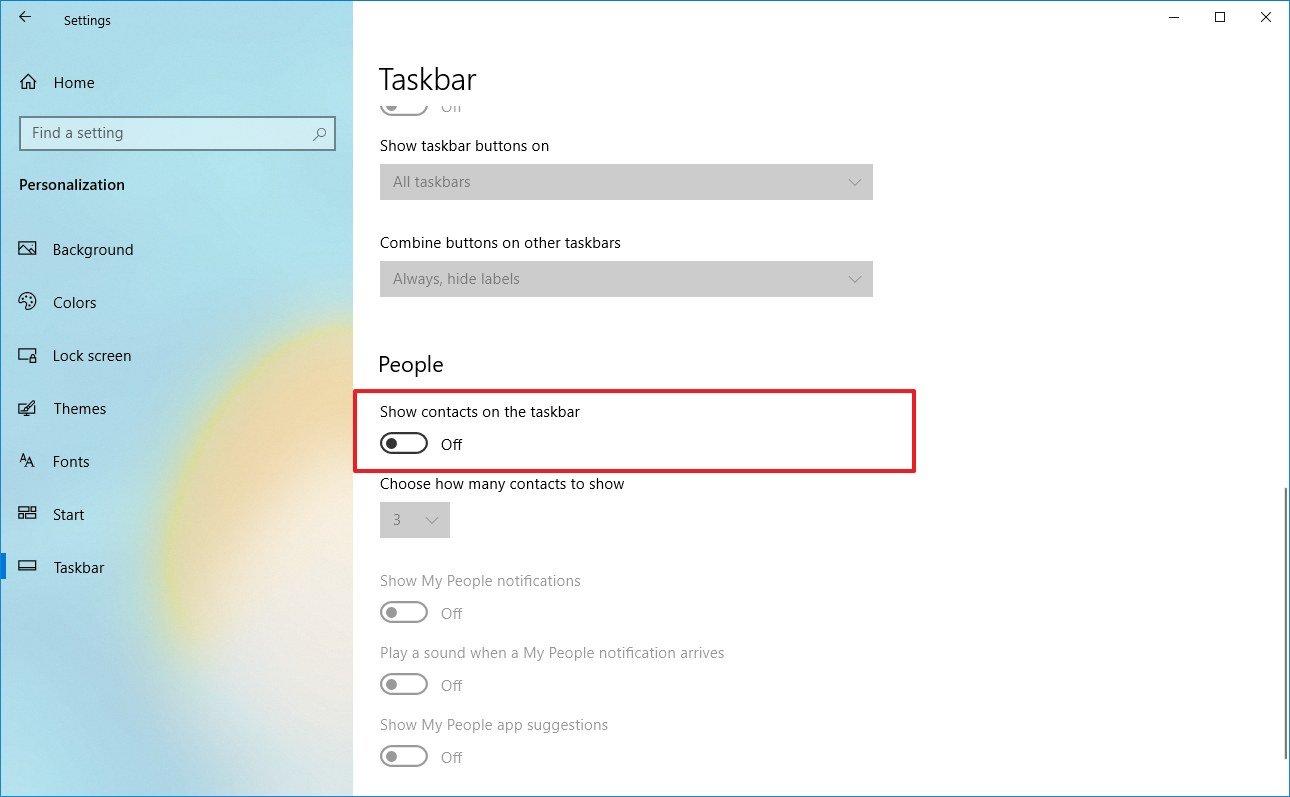
Subsequently you complete the steps, My People will no longer exist available in the taskbar.
Optimize taskbar space
Along with the customization options available through the Settings app, yous can change a few other options from the taskbar itself.
For instance, if you don't actively use the search box, you can arrive smaller or remove the box to create more space to pin boosted apps.
To remove the search box, yous can right-click the taskbar, select Search, click the Hidden pick, or select the Testify search box option.
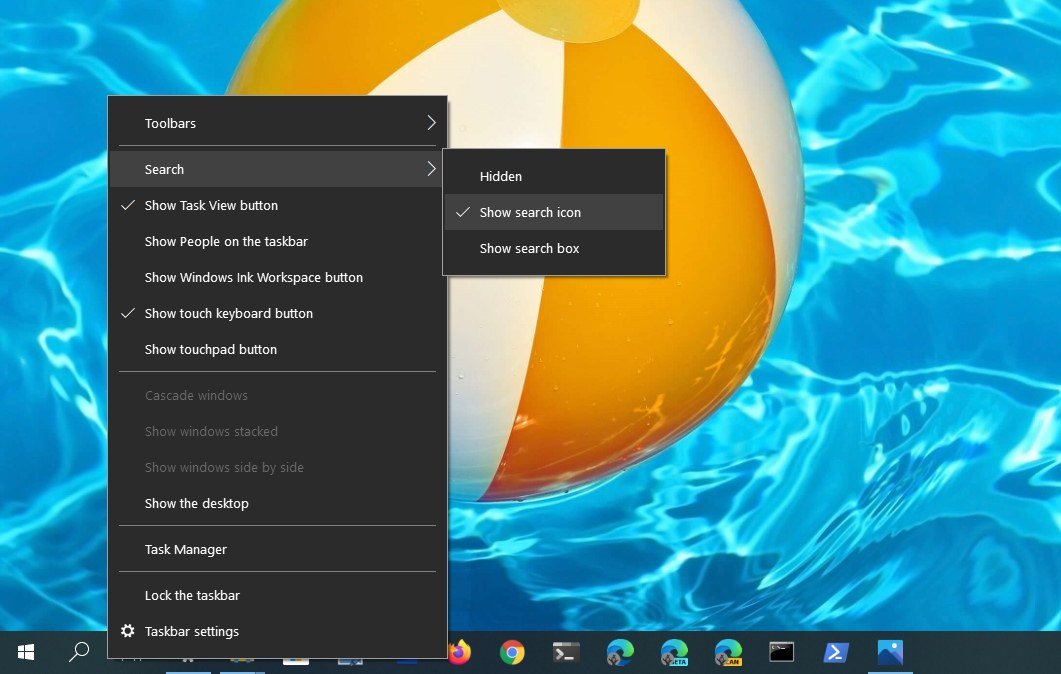
Using the same taskbar context carte du jour, you can remove the Task View, People, and other buttons, wasting valuable space in the taskbar.
You can also bank check this guide for more details on how to fully optimize the space on the taskbar.
While the default settings should be more than adequate for near users, Windows 10 offers many settings to make the experience more personal without having to resource to third-party tools or hacks.
We're focusing this guide on personalizing the desktop with settings that would fit more than users, but it's worth noting that at that place are many other ways to customize Windows 10.
Source: https://www.windowscentral.com/how-customize-look-and-feel-windows-10
Posted by: avilesopixer.blogspot.com
0 Response to "How To Change The Appearance Of Windows 10"
Post a Comment