

Best Grapeseed Oil For Cooking
If you are looking for a neutral flavored cooking oil for using at higher temperatures, why not give grapeseed oil a chance? With a higher smoke point than olive oil, grapeseed oil is ideal for frying and sautéing with and because it does have such a neutral flavor, you can even use it to bake with! As grapeseed oil is also popular for using in skincare and massage treatments, this makes it even more of a versatile oil.
Although there is not much research available as to how beneficial grapeseed oil may be in our diets, in the review we take a look at some of the research to date as well as finding out exactly what grapeseed oil is and how it is produced. If you are new to grapeseed oil, or just looking for a good buy, then we also review ten of the best grapeseed oil for cooking with to help you find the right one for you.
9. Napa Valley Naturals Grapeseed Oil

Highlighted Features
- Pure grapeseed oil which comes in a 25.4 fl. oz glass wine bottle
- Manufactured in California from grapes sourced from other countries
- A delicate and light grapeseed oil
- Its high smoke point of 485°F makes it ideal for cooking
The Napa Valley Naturals grapeseed oil comes as a 25.4 fl. oz glass wine bottle and is made in California from grapes that have been crushed to make wine in other countries. This is a delicate and light oil which has a smoke point of 485°F making it ideal for all cooking needs.
Pros
- Pure grapeseed oil
- Manufactured in California from globally sourced grapes
- Glass bottle
- 485°F smoke point
Cons
- Unknown whether refined or unrefined grapeseed oil
10. Sempio Grapeseed Oil
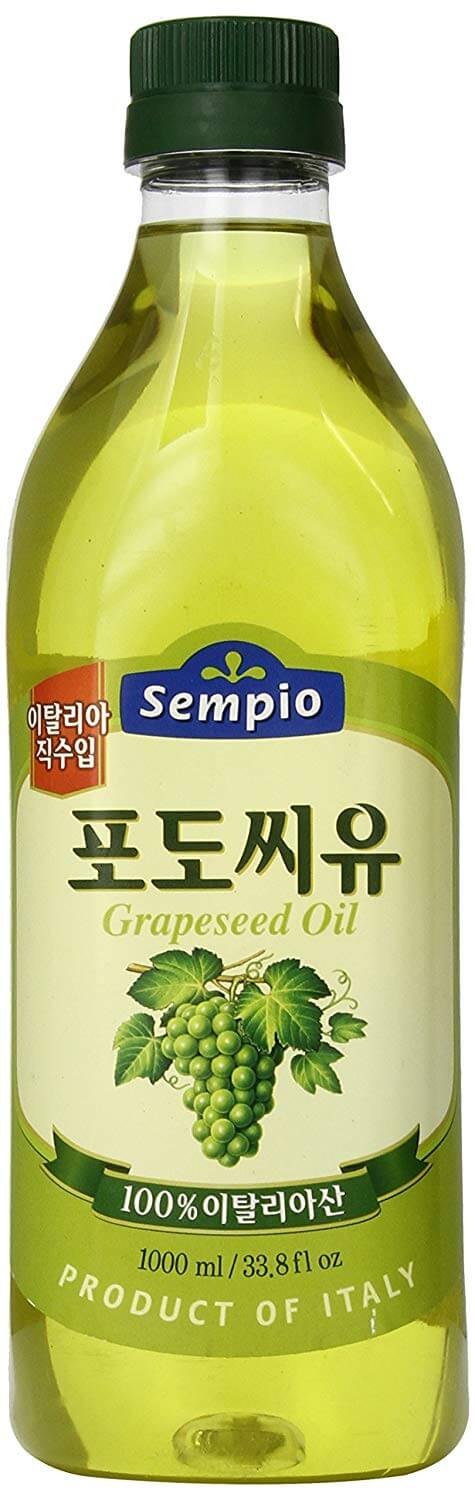
Highlighted Features
- A 33.8 fl. oz plastic bottle of pure grapeseed oil
- Produced in Italy from Italian grapes
- This is a refined oil with a higher smoke point
Produced in Italy from Italian grapes, the Sempio grapeseed oil is a 100% pure and refined grapeseed oil which comes as a 33.8 fl. oz plastic, rather than glass bottle. As a larger bottle, this may not be suitable for all households. As this is a refined, rather than an unrefined grapeseed oil, it will have a higher smoke point, making it even more suitable for higher temperature cooking.
Pros
- Pure grapeseed oil
- Refined
- Made in Italy
- Higher smoke point
Cons
- Comes in a plastic bottle rather than glass
- The larger bottle may be too big for some households
Things to Consider Before Buying Grapeseed Oil for Cooking
Grapeseed oil was first used in France and Europe in the 1930s and began to increase in popularity among chefs from the 1990s onwards.
Grapeseed oil is produced from the seeds of particular varieties of grapes which are the byproducts of winemaking. Grapeseed oils are usually sourced from countries such as Italy, Spain, France or Argentina, or other countries which are key wine producers. A small amount of grapeseed oil may be pressed in the US, but generally, the oil tends to be imported into the US where it is refined if required and then bottled for sale.
Although pressed from grape seeds, grapeseed oil does not taste of grapes. Instead it has a very neutral taste. This neutral taste limits its use as a finishing oil – unless mixed with another oil such as walnut oil – however this actually makes it incredibly versatile as a cooking oil as it is able to absorb the flavors of the food being cooked.
It can be used for baking, stir frying, high heat frying/sautéing, grilling, roasting and more.
Grapeseed oil is also good for marinades and vinaigrettes, as long as herbs, spices, oils or vinegars are used to add some flavor. It will also work well if you make your own mayo.
Nutrition and Potential Benefits of Grapeseed Oil
At present, there is little medical research in humans around the benefits of using grapeseed oil, although oils which are higher in polyunsaturated fats are generally healthier fats than those which are saturated.
One two month study examined the effects of taking either sunflower oil or grapeseed oil daily. Those overweight or obese women who took grapeseed oil had reduced levels of one inflammatory marker (CRP) and improved insulin resistance.
Grapeseed oil is very high in polyunsaturated fats; especially omega-6s. Some research suggests that an intake of more omega-6s compared to omega 3s may be associated with an increased with of chronic disease and inflammation although some controlled studies have shown that linoleic acid, which is an omega-6 fatty acid, does not cause levels of inflammatory markers to increase in the blood.
Grapeseed oil is also a source of vitamin E, in fact just one tablespoon of grapeseed oil will provide 19% of our RDA. It does not contain any significant amounts of any other vitamins or minerals. It may also contain higher levels of PAHs or polycyclic aromatic hydrocarbons which are cancer-causing agents in animals.
Grapeseed oil may also be able to reduce the body's ability to clot blood.
Expeller Pressing and Solvent/Hexane Extraction
Grapeseed oil is more expensive than some other kinds of oil as grape seeds only contain between 8% and 20% oil. Like other types of plant-sourced oil, grapeseed oil is made by pressing grape seeds in one of two ways:
The first method is of expeller pressing (or cold pressing), which uses machinery to mechanically squeeze the oil from the seeds. Expeller pressed oils are usually more expensive, and some consider expeller pressed grapeseed oil to be better quality than those produced by solvent extraction.
Solvent extraction is often known as hexane extraction as this is the most common solvent used. Some people consider solvent extracting can affect the flavor of the oil, but virtually all traces of solvent are removed during the processing.
There are also concerns around hexane and human health. Hexane or n-hexane is found in gasoline so we are regularly exposed to it in the air at gas stations and from our automobile exhausts. Some people are also exposed to it through their jobs and as far back as fifty years ago; scientists recognized that exposure to very high levels of n-hexane in industrial environments caused nerve disorders. There are limits set for exposure to n-hexane in the workplace.
When n-hexane enters the environment, most of it evaporates into the air and if it gets into the ground then it is probably broken down by bacteria. It cannot be stored by animals, fish or plants.
The Difference Between Unrefined and Refined Grapeseed Oil
A grapeseed oil may be refined or unrefined. An unrefined grapeseed oil has been bottled as soon as it has been pressed. These oils keep their flavor as well as more of their nutrients, but the smoke point of unrefined oils are often lower, and they are more likely to turn rancid once open. Although suitable for cooking with, refined oils are often better used for marinades and dressings.
A refined grapeseed oil has been processed to remove some of the compounds that break down over time. This gives an oil which has a good shelf life, neutral taste and perhaps more importantly for cooking – a higher smoke point.
Smoke Points and Cooking with Grapeseed Oil
With a maximum smoke point of around 445°F this puts grapeseed oil between the lower smoke points of corn oil or olive oil and the higher soybean and peanut oils which have a smoke point of around 450°F.
The smoke point or burning point of any oil is the temperature at which it will stop shimmering and start smoking. Although oil may smoke during our cooking, especially when searing or stir-frying, when oil begins to smoke it shows that the oil is beginning to break down.
Once oil starts to breakdown it can give a burnt or bitter flavor to the food as well as releasing more molecules such as free radicals that can contribute to harm in the body.
Although it can be suitable for deep frying some foods with, as grapeseed oil is more expensive than oils such as peanut, do consider this before you decide to deep fry in grapeseed oil. When frying or even roasting, avoid heating grapeseed oil above 445°F.
You can also use a grapeseed oil marinade to prepare food before grilling and it is ideal for seasoning cast iron with.
Storing Grapeseed Oil
If possible, buy grapeseed oil in colored glass bottles as this can help reduce the oil's exposure to light. When an oil is exposed to light, it is able to break down, or turn rancid faster. Because grapeseed oil is also high in polyunsaturated fatty acids, this contributes to it spoiling faster.
When unopened, grapeseed oil should be kept in a cool dark place and once open, placed in the refrigerator or cellar. Depending on the oil itself and whether it is refined or unrefined, it may last for between six and twelve months after opening.
It is a good idea to get into the habit of checking your grapeseed oil for rancidity every time you want to use it.
Conclusion
In this review we have taken a good look at what grapeseed oil is and why it is becoming a popular choice for frying with. We have also discussed some of the early research available for grapeseed oil, and just why some people are concerned about grapeseed oils which are solvent/hexane extracted.
We hope that you have enjoyed reading our reviews of the top ten best grapeseed oil for cooking with and you can now choose the right oil for your cooking needs. Although it can be more expensive than other cooking oils, using a little grapeseed oil to sear the odd steak with or adding it to a vinaigrette is an ideal way to experience this neutral and delicate oil without actually breaking the bank.
Best Grapeseed Oil For Cooking
Source: https://www.foodsharkmarfa.com/best-grapeseed-oils/
Posted by: avilesopixer.blogspot.com
0 Response to "Best Grapeseed Oil For Cooking"
Post a Comment